
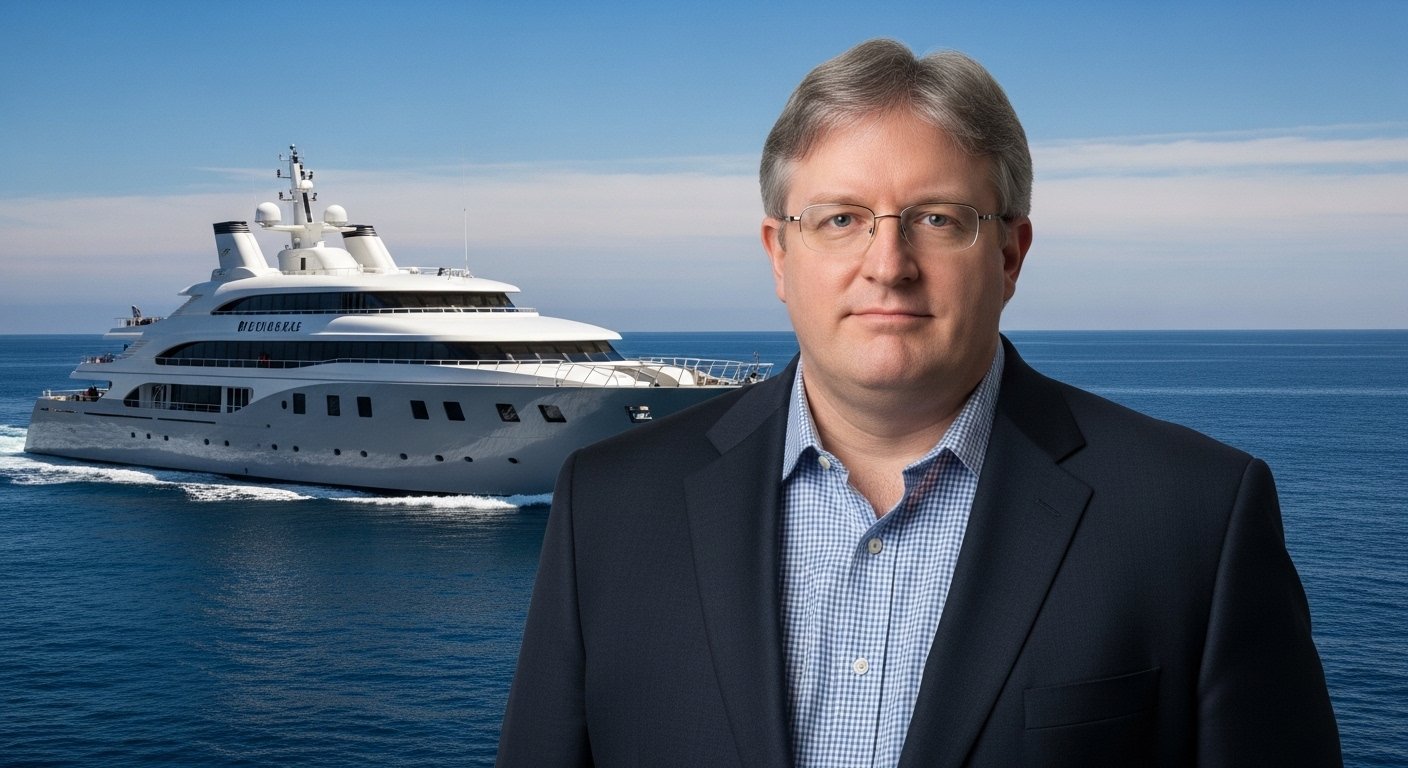
Gabe Newell, affectionately known as “Gaben” to millions of gamers, is the co-founder, president, and majority owner of Valve Corporation. As of April 2026, his net worth sits at approximately $11 billion according to Forbes, placing him among the world’s top billionaires and as one of the richest figures in the entire video game industry.
People search for “Gabe Newell net worth” because his story feels almost unbelievable: a Harvard dropout who left Microsoft to start a tiny game studio that created Half-Life, then built Steam—the digital storefront that now dominates PC gaming. Unlike flashy tech CEOs, Newell keeps a low profile, often living at sea on superyachts while quietly shaping how billions of dollars flow through the gaming world. Understanding his wealth reveals how one smart platform can generate enormous value in the digital age.
How Gabe Newell Built His Fortune
Newell’s journey started far from Silicon Valley glamour. Born in 1962 in Colorado and raised in California, he dropped out of Harvard after Steve Ballmer personally recruited him as Microsoft’s 271st employee. For 13 years he worked on Windows and even helped port the groundbreaking game Doom to Windows 95, proving PCs could be serious gaming machines.
In 1996, he and colleague Mike Harrington left Microsoft to found Valve with their own money. Their first game, Half-Life (1998), was a massive hit that blended storytelling, physics, and immersive gameplay. Harrington later sold his stake, leaving Newell in full control. Valve followed with Half-Life 2, Portal, Team Fortress 2, and Counter-Strike—each one expanding the company’s reach without outside investors or strict deadlines.
The real game-changer came in 2003 with the launch of Steam. At a time when game piracy was rampant and physical discs ruled, Newell bet on a better service: easy updates, community features, and sales. Steam quickly captured 50-70% of the PC download market. Today it serves over a billion accounts and regularly hits record player counts—42 million peak concurrent users in early 2026.
Because Valve never took venture capital, Newell retained a huge ownership stake—Forbes now estimates at least 50%. Every Steam transaction, game sale, and hardware launch (like the popular Steam Deck handheld) flows straight to the company’s bottom line. Recent data shows 5,863 games earned more than $100,000 on Steam in 2025 alone, proving the platform keeps growing the entire industry pie.
Newell didn’t stop at games. He poured money into side projects that reflect his passions: Inkfish (a marine research organization with deep-sea submersibles), Starfish Neuroscience (a brain-computer interface startup planning its first neural chip release by late 2025), and the luxury yacht builder Oceanco, which he acquired in 2025. These ventures diversify his wealth beyond Valve while funding the adventurous lifestyle he clearly enjoys.
Challenges in Estimating—and Growing—His Wealth
Valuing someone like Newell is tricky because Valve is private. Different sources give different numbers: Forbes lands at $11 billion while Bloomberg’s older estimates hovered around $7 billion. The gap comes from how analysts value Steam’s massive but unreported revenue and Valve’s unusual flat management structure (no middle managers, employees choose their own projects).
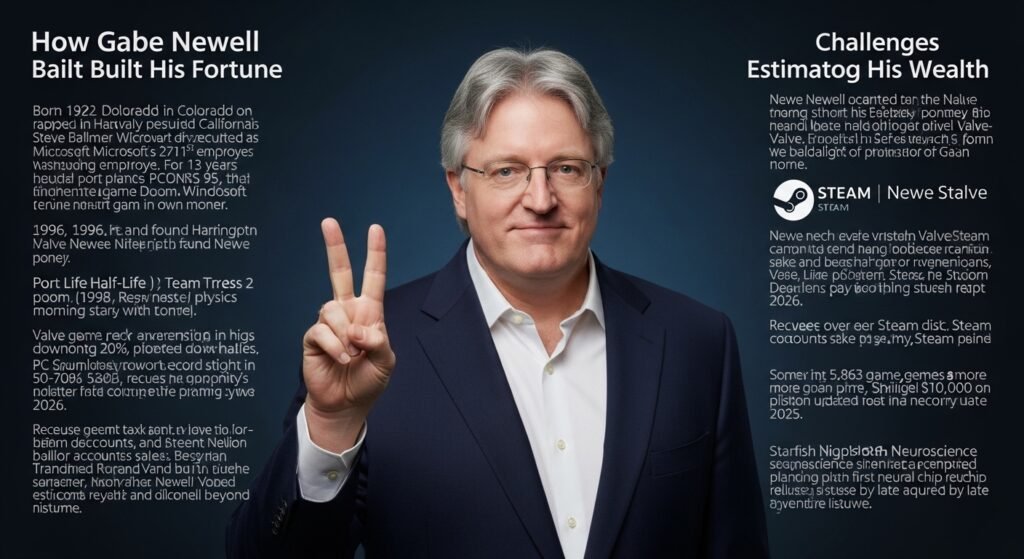
Industry critics sometimes point to Steam’s 30% cut as too high, and developers occasionally complain that even “successful” games barely cover costs after fees and taxes. Yet Valve counters that its tools and visibility help thousands of indie titles thrive—exactly the data they shared at GDC 2026. Newell has also faced personal hurdles, including Fuchs’ dystrophy (a eye condition fixed by cornea transplants) and the pressures of sudden fame after early Valve hits.
Still, these issues haven’t slowed his fortune. Steam’s steady growth and Valve’s lean operation mean high profit per employee—some analysts joke it’s more efficient than many Big Tech giants.
Latest Insights from 2025–2026 Reports and YouTube Discussions
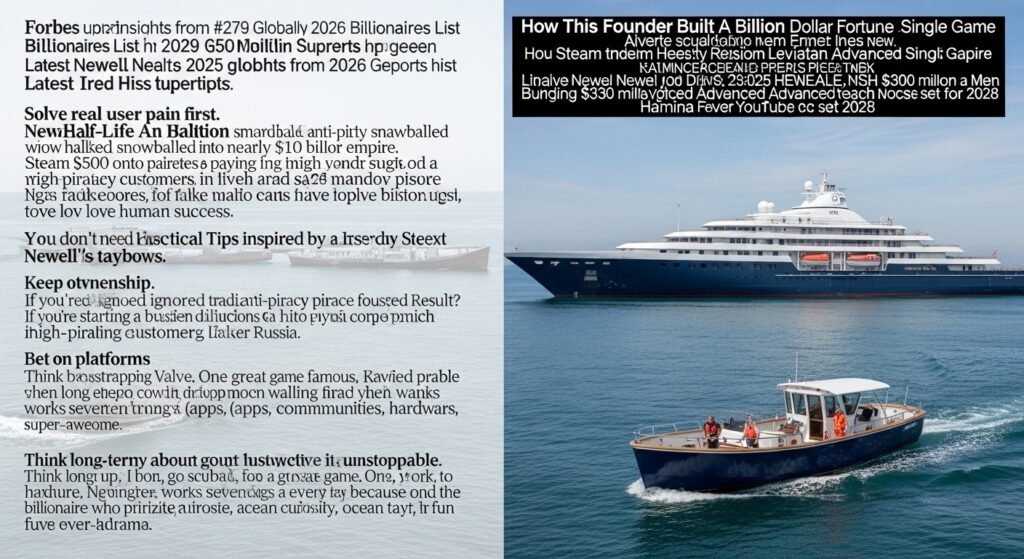
Forbes updated Newell’s ranking to #279 globally in its 2026 Billionaires list, reflecting continued Steam strength and new hardware releases. In late 2025, he took delivery of the $500 million superyacht Leviathan (complete with submarine garage, hospital, and gaming PCs) and is building a $300 million advanced research vessel set for 2028.
YouTube creators have picked up on these details, offering fresh, human perspectives. A widely discussed video titled “How This Founder Built A Billion Dollar Fortune From A Single Game” walks through how Half-Life snowballed into a nearly $10 billion empire, noting Newell owns roughly half of Valve and spends time on one of his five ships. Viewers love the contrast between his reclusive image and massive success.
Even more revealing is a low-subscriber YouTube interview that went viral in gaming circles. When asked about his daily routine, Newell casually replied: “I get up, I work, I go scuba diving, then work some more.” He added that he’s “been retired for a long time” yet works seven days a week because “the things I get to do every day are super-awesome.” Fans on Reddit and gaming forums say clips like this humanize him—showing a billionaire who prioritizes curiosity, ocean exploration, and fun over boardroom drama.
Lessons and Practical Tips Inspired by Newell’s Path
You don’t need to found the next Steam to apply his playbook. Here are clear, actionable takeaways:
- Solve real user pain first. Newell ignored traditional anti-piracy and focused on convenience. Result? Steam turned pirates into paying customers in high-piracy markets like Russia.
- Keep ownership. By bootstrapping Valve, Newell avoided dilution. If you’re starting a business, consider how much control you’re willing to trade for faster growth.
- Bet on platforms, not just products. One great game made Valve famous; Steam made it unstoppable. Think long-term about ecosystems (apps, communities, hardware) rather than single hits.
- Stay curious and diversify. Newell’s marine research, neuroscience, and yacht ventures show successful people often explore unrelated fields that spark joy and new ideas.
- Measure success beyond money. In interviews, he emphasizes fun and impact. Track metrics like user happiness and team creativity alongside revenue.
For everyday readers curious about wealth-building, Newell’s story proves patience and obsession with quality can outperform hype. Start small, ship something people love, and let compounding (users, revenue, reputation) do the rest.
Final Thoughts
Gabe Newell’s $11 billion net worth isn’t just about video games—it’s about creating a platform that millions use daily and then quietly reinvesting in science, exploration, and personal passions. From Harvard dropout to Steam billionaire living on a superyacht while scuba diving between work sessions, his path shows that genuine innovation, customer focus, and long-term thinking still create enormous value in 2026.
Whether you’re a gamer, aspiring entrepreneur, or simply fascinated by tech fortunes, Newell’s example offers one clear takeaway: build something people can’t live without, keep control of your vision, and never stop exploring what excites you. The next chapter of his story—new hardware, brain tech, and ocean research—will be just as interesting to watch.
FAQs
As of 2026, Gabe Newell’s net worth is estimated at around $11 billion, mainly from his ownership stake in Valve Corporation and the success of the Steam platform.
Gabe Newell built his fortune by co-founding Valve, creating hit games like Half-Life, and launching Steam, the dominant digital distribution platform for PC gaming.
Gabe Newell is estimated to own at least 50% of Valve, which significantly contributes to his billionaire status.
Apart from Valve, Gabe Newell has invested in Inkfish (marine research), Starfish Neuroscience (brain-computer interfaces), and the yacht builder Oceanco.