
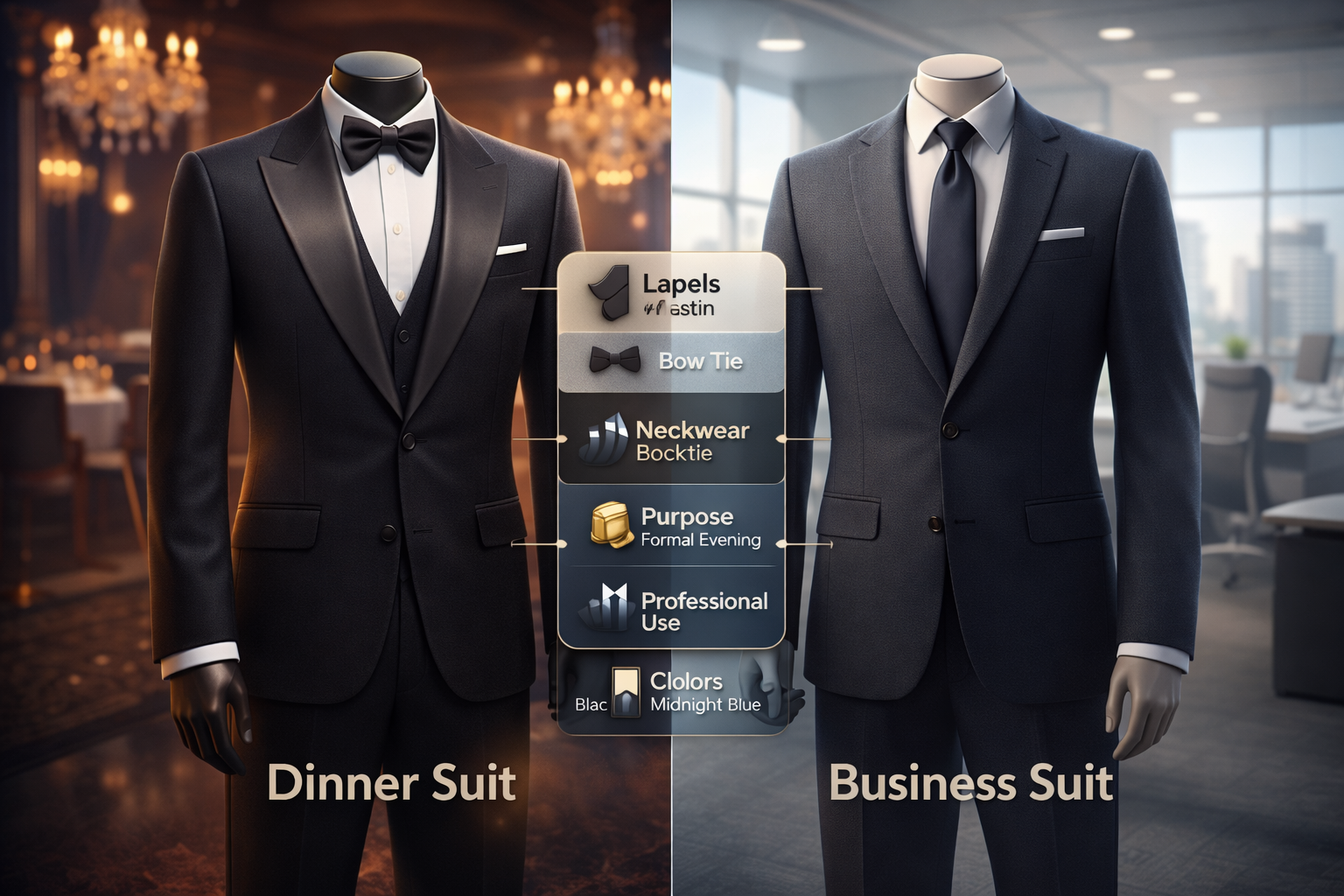
Understanding the difference between a dinner suit and a business suit can save you from an embarrassing wardrobe mistake at your next important event. While both are formal options in a man’s wardrobe, they serve completely different purposes and follow distinct style rules. This guide breaks down everything you need to know to dress appropriately for any occasion.
What Is a Dinner Suit?
A dinner suit—also called a tuxedo in the United States—is designed specifically for black-tie and formal evening events. It represents the highest level of elegance in men’s semi-formal attire.
Key features of a dinner suit include:
- Satin or silk lapels — The shiny, contrasting lapels are the most distinctive feature
- Satin stripe down the trouser leg — Matching the lapel finish
- Covered buttons — Often wrapped in silk or satin fabric
- Peak or shawl lapels — More dramatic than standard notch lapels
- Always paired with a bow tie — Never a regular necktie
- Typically black or midnight blue — Traditional colors only
What Is a Business Suit?
A business suit is built for professional settings and everyday formal occasions. It prioritizes versatility and practicality over ceremonial elegance.
Key features of a business suit include:
- Matching fabric throughout — Lapels, buttons, and trousers use the same material
- Natural buttons — Horn, plastic, or shell buttons without covering
- Notch lapels — The most common and versatile style
- Wide color range — Navy, charcoal, gray, brown, and patterns
- Worn with neckties — Regular ties, not bow ties
- Functional pockets — Designed for practical use
The Main Differences at a Glance
| Feature | Dinner Suit | Business Suit |
|---|---|---|
| Lapels | Satin/silk, peak or shawl | Matching fabric, notch |
| Buttons | Covered in fabric | Natural materials |
| Trousers | Satin side stripe | Plain |
| Colors | Black, midnight blue | Various |
| Neckwear | Bow tie | Necktie |
| Purpose | Formal evening events | Professional settings |
| Formality | Semi-formal to formal | Business formal |
When to Wear a Dinner Suit
A dinner suit is appropriate for events that specify “black tie” or “formal” dress code. These typically include:
- Weddings — Especially evening ceremonies
- Galas and charity balls
- Award ceremonies
- Opera and theater premieres
- Formal dinners and banquets
- New Year’s Eve parties
- Cruise ship formal nights
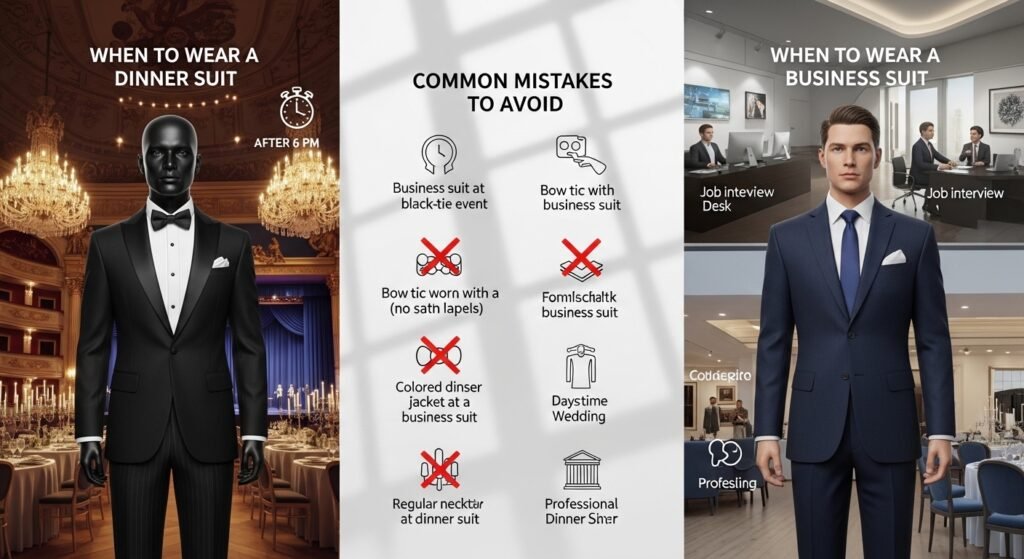
Important rule: Black-tie events traditionally begin after 6 PM. Wearing a dinner suit during daytime hours is considered inappropriate.
When to Wear a Business Suit
Business suits work across many professional and semi-formal situations:
- Office work and meetings
- Job interviews
- Business conferences
- Daytime weddings
- Funerals and memorial services
- Court appearances
- Business dinners
- Cocktail parties (when black tie is not specified)
Common Mistakes to Avoid
Wearing a business suit to a black-tie event — You will stand out for the wrong reasons. The lack of satin details makes a business suit visibly underdressed.
Wearing a bow tie with a business suit — This combination looks costume-like. Stick to regular neckties with business suits.
Choosing a colored dinner suit for formal events — While fashion has evolved, traditional black-tie events still expect black or midnight blue. Save the burgundy or green dinner jacket for creative events.
Adding a regular tie to a dinner suit — Dinner suits require bow ties. A long tie defeats the purpose of formal evening wear.
Which Should You Buy First?
For most men, a business suit comes first. You can wear it to work, interviews, and various events throughout the year. It offers better value through frequent use.
A dinner suit makes sense when you regularly attend formal events. Renting remains a practical option for occasional black-tie occasions.
Final Thoughts
The dinner suit and business suit each have their place in a well-dressed man’s wardrobe. The dinner suit brings ceremony and elegance to evening events, while the business suit handles professional life and everyday formality.
When in doubt, check the dress code on your invitation. “Black tie” means dinner suit. “Business formal” or “business attire” means your standard suit. Getting this right shows respect for the event and confidence in your personal style.
FAQs
The main difference lies in formality and purpose. A dinner suit is worn for formal evening events, while a business suit is designed for professional and daytime occasions.
No. Black-tie events require a dinner suit. A business suit lacks satin details and is considered underdressed for such occasions.
Yes. A traditional dinner suit must be worn with a bow tie. Wearing a regular necktie breaks black-tie dress code rules.
A business suit is the correct choice for job interviews due to its professional and practical design.