
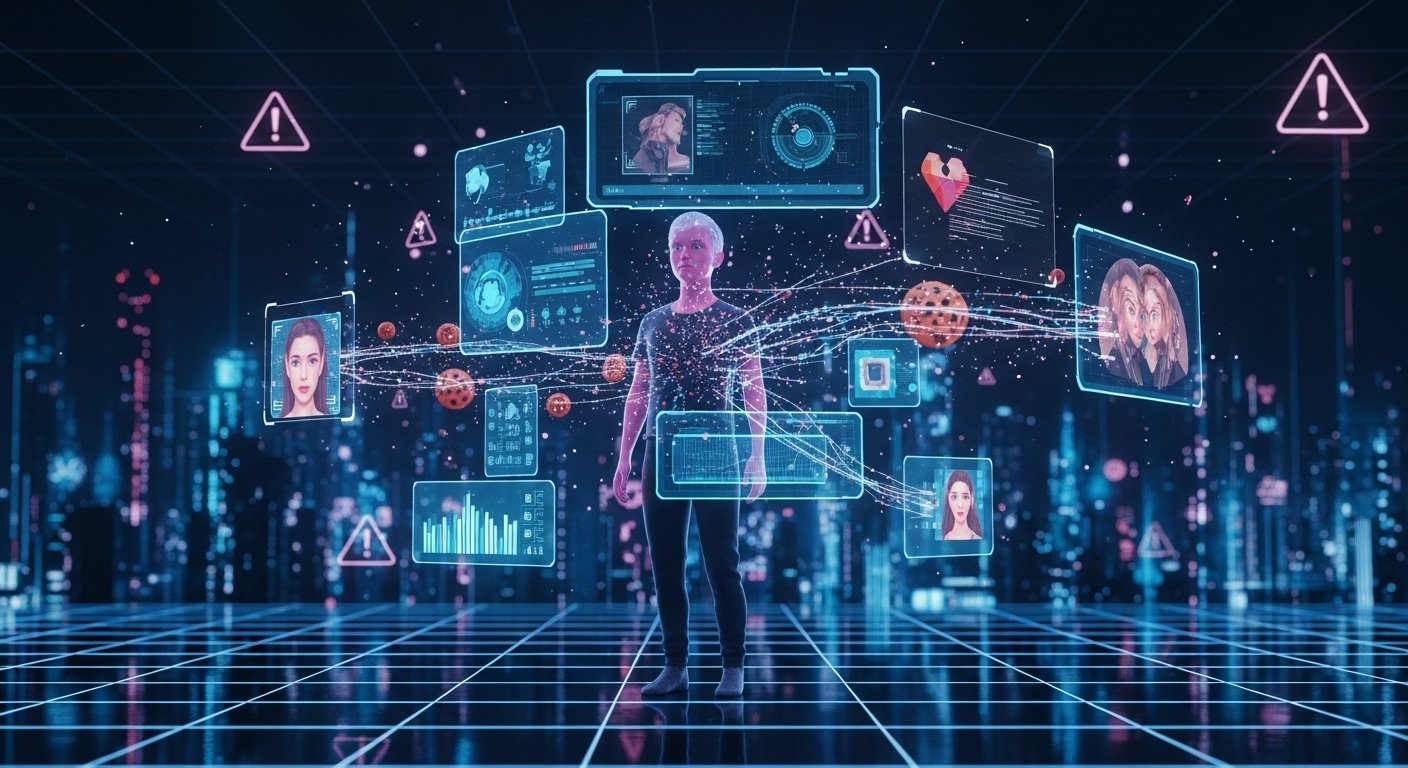
The emergence of generative artificial intelligence has signaled a paradigm shift in digital content production, yet its most prolific and concerning application resides within the adult entertainment sector. The proliferation of “free AI porn” and “free porn AI” services—platforms that leverage deep learning models to generate or manipulate explicit imagery—has created a complex web of risks that extend far beyond the traditional critiques of pornography consumption. As these technologies evolve from niche curiosities into mainstream accessible tools, they introduce unprecedented threats to individual privacy, psychological health, and the foundational norms of interpersonal relationships. This report analyzes the multifaceted dangers inherent in the free AI pornography ecosystem, examining the mechanism of synthetic exploitation, the neurological impact of hyper-customized stimuli, and the systemic erosion of consent in the digital age.
The Illusion of Zero-Cost Access: Cyber-Insecurity and Data Harvesting
The designation of “free” in the synthetic media landscape is frequently a deceptive marketing veneer for aggressive and predatory data extraction. In the digital economy, when a service is offered without a monetary fee, the user’s data becomes the primary commodity. For free AI porn platforms, this extraction process is uniquely invasive, as it captures not only basic demographic information but also deeply personal behavioral patterns and biometric identifiers.
Predatory Data Architectures and the UNC6032 Campaign
The technical infrastructure supporting free AI generators is often characterized by intentional security vulnerabilities designed to facilitate data exfiltration. Investigative reports from 2024 and 2025 have identified sophisticated malicious campaigns, such as UNC6032, which weaponize the public interest in AI video and image generation. This specific campaign utilizes fraudulent “free” websites masquerading as legitimate tools to distribute Python-based infostealers and backdoors.
These platforms often gain traction through “malvertising”—the use of malicious ads on social media platforms like Facebook and LinkedIn to direct unsuspecting users to cloned sites. Once a user interacts with these sites, the “Text-to-Malware” pipeline begins, where the browser or device is compromised, allowing for the theft of login credentials, browser cookies, and financial information, often exfiltrated via the Telegram API to dark web repositories.
| Data Component | Exfiltration Mechanism | Potential Misuse/Harm |
| Session Cookies | Automated scraping during site interaction. | Account takeover and identity theft across non-pornographic platforms. |
| Biometric Metadata | Extraction from uploaded face images for “nudify” or “swap” functions. | Permanent digital identity theft; creation of secondary non-consensual content. |
| Prompt Logs | Storage of specific fetish or identity-based search queries. | Targeted extortion (sextortion) based on revealed personal interests. |
| Device Telemetry | IP tracking and device ID harvesting. | Cross-site tracking and the creation of comprehensive consumer “shadow profiles.” |
Vulnerability of Centralized User Libraries
Even platforms that present themselves as “legitimate” free services pose significant risks due to poor data governance. The centralized libraries created by these platforms—often containing millions of user-generated synthetic images—become prime targets for sophisticated cybercriminal groups. For instance, the 2025 breach of a major adult analytics provider exposed the viewing habits and search histories of over 200 million users. In the context of AI-generated content, a breach does not just reveal what was watched, but how the user interacted with the AI, potentially exposing the specific facial features and identities the user attempted to manipulate or generate.
The Neurological Hijack: Dopaminergic Desensitization and Cognitive Decay
The transition from traditional, static pornography to AI-generated content represents a move toward a “super-normal stimulus.” By allowing for hyper-personalization, free AI porn platforms enable a feedback loop that maximizes neurochemical release, leading to profound structural and functional changes in the human brain.
The Mechanism of Downregulation
The human brain’s reward system, governed primarily by the mesolimbic dopamine pathway, is evolved to respond to natural rewards such as social connection or physical activity. Traditional pornography already challenges this system, but AI-generated content—which can be tailored to fulfill hyper-specific fantasies with mathematical precision—causes sustained dopamine spikes that far exceed biological baselines.
When the brain is consistently flooded with these artificial dopamine surges, it initiates a defensive process known as “downregulation.” In this state, the brain reduces the number of available dopamine receptors to protect the system from overstimulation. This leads to a state of “hedonic sensitization,” where the user’s “liking” of the content decreases while their “wanting” or craving increases—a hallmark of behavioral addiction.
| Neurological Metric | Impact of Sustained AI Porn Consumption | Behavioral Manifestation |
| Dopamine Receptor Density | Significant reduction (Downregulation). | General anhedonia; inability to enjoy non-sexual daily activities. |
| Prefrontal Cortex (PFC) Integrity | Weakened connections and potential grey matter shrinkage. | Impaired impulse control; inability to resist compulsions. |
| Reward Pathway Sensitivity | Desensitization to natural stimuli. | Reduced interest in real-life romantic or physical intimacy. |
| Amygdala Reactivity | Heightened stress response during withdrawal. | Irritability, anxiety, and restlessness when unable to access content. |
Cognitive Impairment and the “Brain Fog” Phenomenon
The structural changes induced by chronic consumption of high-intensity synthetic media are not limited to reward pathways. MRI studies have demonstrated that heavy pornography users often exhibit less grey matter in the prefrontal cortex—the region responsible for complex thinking, decision-making, and emotional regulation. This “neurological rewiring” makes it increasingly difficult for individuals to focus on professional or academic tasks, leading to what is often described as “brain fog” or a general decline in cognitive empathy.
Furthermore, the “time displacement effect” observed in younger demographics indicates that hours spent interacting with AI generators replace cognitively stimulating or socially enriching activities. This creates a developmental deficit, where the user fails to develop the interpersonal skills necessary for healthy adult functioning.
The Erosion of Interpersonal Reality: Relationship Distortion and Intimacy Disorders
The use of free AI porn platforms fundamentally alters the user’s perception of body standards, sexual behavior, and the value of human partners. The ability to create a “dream partner” through an AI chatbot or image generator creates an environment where real humans must compete with flawlessly designed, synthetic entities.
Competing with Synthetic Perfection
Artificial intelligence allows users to generate partners who not only fit unrealistic physical standards but are also programmed for constant availability and validation. This creates a “distorted expectation” of real-world interactions. When real humans—with their inherent complexities, needs, and flaws—fail to meet these AI-driven standards, the user may experience a decline in relationship satisfaction or a total withdrawal from the dating market.
The psychological impact on the partners of AI porn users is equally severe. Many report feelings of “betrayal trauma,” particularly when the user has utilized AI to generate content featuring the likeness of acquaintances or when the user has developed a “romantic” or “erotic” relationship with a synthetic agent. The secrecy inherent in these habits often erodes the trust essential for healthy long-term partnerships, leading to isolation and emotional distance.
The Displacement of Authentic Human Empathy
Research suggests a correlation between heavy consumption of customized synthetic pornography and lower levels of both cognitive and affective empathy. By viewing human likenesses as digital assets to be manipulated and discarded, users can become “emotionally detached” from real-life acquaintances. This detachment is particularly dangerous in the context of “virtual influencers” and AI chatbots, where the user may begin to prefer the synthetic, non-conflicting relationship over the “difficult interpersonal conflicts” that characterize genuine human growth.
Ethical Transgressions and the Systemic Crisis of Consent
The most profound societal danger posed by free AI porn is the normalization of non-consensual media. The technology has effectively weaponized the human likeness, transforming it into a tool for harassment, extortion, and humiliation.
The Prevalence of Image-Based Sexual Abuse (IBSA)
Estimates from 2023 and 2024 indicate that approximately 98% of all deepfake videos online are pornographic, with women and girls being the overwhelming targets. The emergence of “nudify” bots on platforms like Telegram has enabled hundreds of thousands of users to create non-consensual explicit images with a single click.
This practice, now recognized as “AI-generated image-based sexual abuse” (AI-IBSA), inflicts severe psychological harm on the victims, regardless of the synthetic nature of the imagery. Victims report experiences of humiliation, shame, violation, and a loss of control over their digital identities. The “permanence” of these images online creates a “continual emotional distress,” as victims fear the content will resurface in professional or personal contexts throughout their lives.
The Surge in AI-Generated Child Sexual Abuse Material (CSAM)
The ethical crisis reaches its peak in the context of minors. The Internet Watch Foundation (IWF) reported a staggering increase in AI-generated CSAM in 2025, with analysts detecting thousands of photorealistic videos depicting graphic abuse.
| CSAM Metric (IWF 2024-2025) | Recorded Data/Change | Implication |
| AI Video Reports | 26,362% Increase. | Rapid transition from still images to realistic video manipulation. |
| Actionable Reports | 380% Increase year-over-year. | Greater accessibility of “nudify” and generation tools for offenders. |
| Actionable AI CSAM | Over 3,400 videos in a single year. | Massive scalability of child exploitation material. |
| Dark Web Uploads | 20,000+ images in a one-month forum analysis. | The creation of high-volume synthetic databases for trade. |
This proliferation not only revictimizes known survivors but also normalizes child exploitation by lowering the barriers to entry for potential offenders. The “desensitization” of users to increasingly extreme synthetic content acts as a facilitation mechanism for real-world offending.

Global Legal Responses and the Regulatory Landscape
The legislative response to synthetic pornography is currently a landscape of “catch-up,” as governments attempt to mitigate the harms of technology that evolves faster than the judicial process.
The TAKE IT DOWN Act and Federal Mandates
In the United States, the signing of the TAKE IT DOWN Act on May 19, 2025, represented the first significant federal bipartisan effort to combat deepfake non-consensual imagery. The Act establishes clear criminal penalties for the intentional publication of NCII and mandates that digital platforms implement rigorous notice-and-removal procedures.
| Legal Requirement (TAKE IT DOWN Act) | Specific Provision | Compliance Target |
| Publication Penalty | Criminal fines and up to 2 years imprisonment. | Creators and distributors of non-consensual deepfakes. |
| Threat Penalty | Up to 30 months imprisonment for threats involving minors. | Individuals engaging in sextortion or digital blackmail. |
| Takedown Window | Removal must be executed within 48 hours of a valid request. | Covered platforms (social media, mobile apps). |
| Process Transparency | Platforms must provide “plain language” removal instructions. | User-generated content forums and app stores. |
State-Level and International Divergence
Beyond federal law, individual states like California (SB 926, SB 981) and New York have implemented more stringent local protections, including the creation of private rights of action for victims. Internationally, the United Kingdom’s Online Safety Act and the EU’s AI Act (2024) have introduced transparency requirements, mandating that creators tag AI-generated content or face significant penalties. However, the efficacy of these laws is often hampered by the “lawless” nature of the dark web and the difficulty of identifying perpetrators who operate behind anonymized networks.
Cultural Normalization and the “Liar’s Dividend”
Widespread consumption of free AI pornography contributes to a broader societal erosion of trust and the distortion of cultural values. One of the most insidious effects is the “liar’s dividend”—a phenomenon where the ubiquity of deepfakes allows individuals to dismiss genuine, authentic evidence of wrongdoing as being “AI-generated”.
The “Manosphere” and Algorithmic Radicalization
The intersection of AI technology and the toxic misogyny found in the “manosphere” creates a dangerous feedback loop. Algorithmic “tweaking” on mainstream social media platforms often prioritizes extreme content to maximize engagement, effectively grooming young men into viewing non-consensual digital manipulation as a “harmless fantasy” or a tool for social dominance. This normalization of violence against women and girls is linked to increasing rates of digital harassment and the silencing of women in online forums.
The Decline of Physical Standards and Authenticity
By presenting photorealistic but physically impossible body standards as “normal,” free AI platforms exacerbate the body image crisis among all demographics. This contributes to a culture of “perceptual distortion,” where users become increasingly dissatisfied with reality, leading to a “USD 420 billion annual shortfall” in gender equality as women are pushed out of digital and professional spaces due to the prevalence of harassment.
Safety Protocols: Preventive Measures and Digital Hygiene
Given the pervasive nature of the synthetic media ecosystem, individuals must adopt proactive strategies to protect their digital identities and mental health.
Protecting Personal Likeness and Data
- Privacy-Smart Habits: Users should limit the amount of high-quality, close-up face selfies shared publicly. Social media accounts should be set to “Private,” and follower requests from unknown individuals should be scrutinized or denied.
- Opting Out of AI Scrapers: Major platforms like Meta (Facebook/Instagram), X (Grok), and LinkedIn now offer (often hidden) settings to opt out of AI training. Individuals should navigate to the Privacy Centers of these apps and explicitly object to the use of their content for model training.
- Watermarking and Tracing: When sharing images is necessary, the use of digital watermarks can discourage deepfake creators by making the original source more traceable and the manipulation more obvious.
Strategic Response to Deepfake Attacks
If an individual becomes a victim of non-consensual AI imagery, rapid response is critical:
- Document and Save: Before content is deleted, save all evidence, including screenshots, full URLs, and timestamps.
- Report to Platforms: Utilize the mandated 48-hour takedown procedures under the TAKE IT DOWN Act by submitting a formal notice-and-removal request.
- Engage Law Enforcement: Report the incident to the NCMEC CyberTipline or local police, particularly if the imagery involves a minor or is being used for extortion.
- Utilization of Detection Tools: Services like Reality Defender or Hive AI can be used to verify the synthetic nature of content, providing evidence to support removal requests or legal action.
Conclusions and Professional Assessment
The “free AI porn” ecosystem represents a critical sociotechnical threat. While the technology itself is a testament to human ingenuity, its application in the adult sector has created a system of “synthetic predation.” The “cost” of free access is high: it is paid through the permanent loss of privacy, the neurological hijacking of the human reward system, and the erosion of the concept of sexual consent.
For the individual, the risks include behavioral addiction, cognitive decline, and the deterioration of real-world relationships. For society, the risks are even more profound—the normalization of child exploitation, the amplification of gender-based violence through the manosphere, and the destruction of public trust via the “liar’s dividend.” As of 2026, the legislative and technical communities are in a state of catch-up, attempting to build “guardrails” for a technology that is designed to bypass them. Until robust international standards and more effective detection mechanisms are established, the primary defense against the harms of free AI pornography remains a combination of rigorous digital hygiene, the enforcement of stringent consent-based laws, and a collective societal rejection of synthetic exploitation.
FAQS
Free AI-generated pornography refers to platforms or services that use artificial intelligence to create, manipulate, or customize explicit content at no monetary cost to users. These services often leverage deep learning models to produce realistic or hyper-personalized adult content.
Although marketed as free, these platforms often harvest personal data, including behavioral patterns, facial images, device telemetry, and search queries. Users’ information becomes the primary commodity, which can be exploited for identity theft, extortion, or sold on the dark web.
AI-IBSA is the creation of non-consensual explicit content using AI tools, such as “nudify” bots. Victims experience severe psychological harm, humiliation, and loss of control over their digital identity. Most AI deepfake content targets women and girls.
For individuals, the risks include behavioral addiction, cognitive decline, and weakened real-world relationships. For society, it contributes to normalization of child exploitation, gender-based violence, and erosion of trust in digital content.