
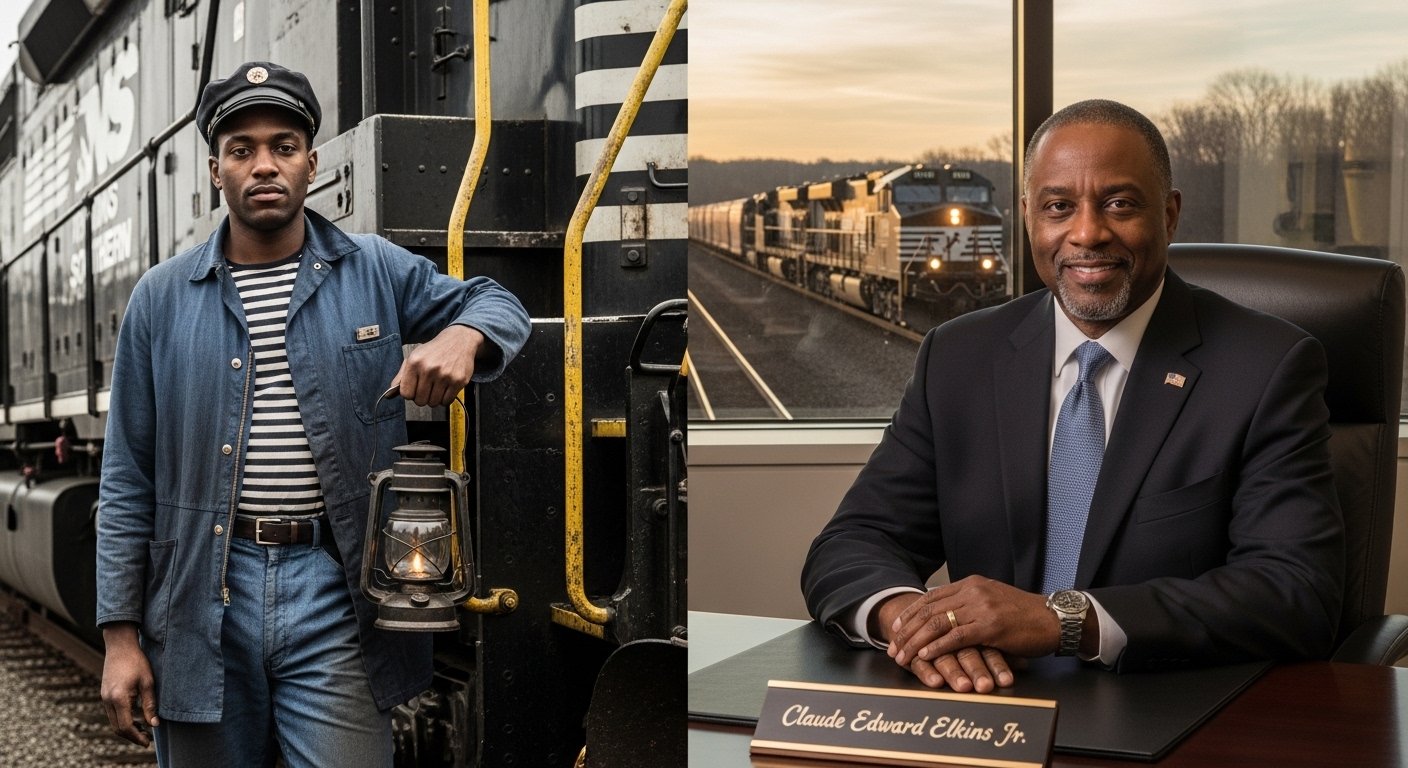
Claude Edward “Ed” Elkins Jr. is a standout leader in America’s freight rail industry. As Executive Vice President and Chief Commercial Officer at Norfolk Southern Corporation, he oversees key business units including intermodal, automotive, and industrial products, along with real estate, industrial development, and customer logistics. His story stands out because it shows how someone can rise from hands-on railroad work to the executive suite through steady effort, continuous learning, and deep industry knowledge. In an era when supply chains power the economy and rail remains vital for moving goods efficiently and sustainably, Elkins’ journey offers real inspiration for anyone building a long-term career in logistics or transportation.
Early Life, Military Service, and Entry into Railroading
Born and raised in Southwest Virginia, Elkins grew up in a region where railroads were part of everyday life and hard work was a core value. Before entering the rail industry, he served in the United States Marine Corps, gaining discipline and leadership skills that would shape his professional path. In 1988, he joined Norfolk Southern as a road brakeman—an entry-level operations role that involves physically demanding work on the tracks, often in tough weather and tight schedules.
Starting at the bottom is common in railroading but not easy. New hires face long hours, safety risks, and the pressure of keeping trains moving on time. Elkins later advanced to conductor, locomotive engineer, and relief yardmaster. These roles taught him the realities of daily operations: coordinating crews, managing schedules, and solving problems on the spot. Many people in similar positions stay in operations forever, but Elkins used this foundation to move into commercial and marketing sides of the business. His military background and early rail experience gave him credibility when dealing with frontline workers and customers alike.

Steady Climb: Education, Expertise, and Key Promotions
What sets Elkins apart is his commitment to education while working full time. He earned a bachelor’s degree in English from the University of Virginia’s College at Wise and later an MBA from Old Dominion University with a focus on port and maritime economics. He also completed management certificate programs at Harvard Business School, UVA Darden School of Business, and the University of Tennessee Supply Chain Institute.
After about two decades in operations and intermodal marketing, he took on bigger leadership roles. In 2016, Norfolk Southern named him Group Vice President of Chemicals Marketing. Two years later, in 2018, he became Vice President of Industrial Products. By December 2021, the company appointed him Executive Vice President and Chief Marketing Officer (later evolving to Chief Commercial Officer). In this position, he leads strategy for moving everything from consumer goods to raw materials across one of the largest eastern U.S. rail networks.
His promotions reflect a clear pattern: deep operational knowledge combined with commercial insight. Rail companies need leaders who understand both the tracks and the balance sheet—especially as the industry deals with competition from trucking, shifting customer demands, and pressure to cut emissions.
Current Role, Industry Challenges, and Impact
As Chief Commercial Officer, Elkins focuses on customer relationships, revenue growth, and adapting to market changes. Norfolk Southern moves more than 7 million carloads yearly and runs the largest intermodal network in the eastern United States. The company also helps customers avoid millions of tons of carbon emissions by choosing rail over trucks.
Major challenges in the rail sector include intense intermodal competition, fluctuating volumes (especially coal and other commodities), supply-chain disruptions, and regulatory hurdles. In recent earnings calls, Elkins has spoken openly about these pressures. For instance, in the Q4 2025 call, he noted volume and revenue dips but highlighted NS’s proactive steps—like new interline services with Union Pacific and double-stack routes to New England—to win back business. “We’re not sitting back and taking body blows,” he emphasized, showing a competitive mindset.
A major recent development is Norfolk Southern’s application with Union Pacific to form a transcontinental railroad called “The Great Connection.” In a message to customers, Elkins described the filing as a milestone that could transform coast-to-coast freight movement, with a target completion in early 2027. This move underscores his role in shaping long-term strategy amid industry consolidation.
Beyond the company, Elkins gives back through leadership roles. He serves on the boards of the National Association of Manufacturers and TTX Company, and he is actively involved with the Georgia Chamber of Commerce—serving as Chair in 2025 after earlier roles as Foundation Chair and Vice Chair. He also sits on the Georgia State University Marketing RoundTable and the East Lake Foundation board. These positions let him advocate for business-friendly policies while supporting community initiatives.
Practical Tips for Career Growth Inspired by Elkins’ Path
Elkins’ career offers clear lessons for anyone in transportation, logistics, or operations-heavy fields:
- Start strong and learn the basics — Hands-on experience builds credibility and reveals how the business really works.
- Invest in education continuously — Degrees and certificates opened doors even while he worked full time.
- Build expertise step by step — Moving from operations to marketing to executive leadership shows the value of broad knowledge.
- Focus on customers and relationships — Commercial success comes from listening to shippers and solving their problems.
- Stay adaptable — Railroading changes with technology, regulation, and markets; proactive leaders who innovate (like new interline services) thrive.
- Give back through service — Board roles and community involvement expand your network and impact.
These steps are especially useful for veterans, entry-level workers, or mid-career professionals aiming for leadership.
Conclusion: A Model of Perseverance in a Vital Industry
Claude Edward Elkins Jr.’s rise from Marine Corps veteran and brakeman in 1988 to Chief Commercial Officer at one of America’s major railroads proves that dedication, education, and customer focus can create extraordinary careers. In an industry critical to the U.S. economy and sustainability goals, his leadership helps move goods efficiently while navigating competition and big changes like potential mergers.
For aspiring professionals, Elkins’ story is a reminder that no starting point is too humble if you keep learning and delivering results. Whether you work on the tracks, in an office, or run a business that ships freight, his example shows how consistent effort and strategic thinking pay off. As rail continues evolving, leaders like Elkins will help shape a stronger, more connected supply chain for the future.
FAQs
Claude Edward Elkins Jr. is the Chief Commercial Officer at Norfolk Southern Corporation, responsible for overseeing intermodal, automotive, industrial products, and customer logistics.
He earned a bachelor’s degree in English from the University of Virginia’s College at Wise, an MBA from Old Dominion University, and completed management certificates at Harvard, UVA Darden, and University of Tennessee Supply Chain Institute.
Elkins focuses on intermodal competition, fluctuating freight volumes, supply-chain disruptions, regulatory hurdles, and sustainability by moving freight efficiently while reducing carbon emissions.
He leads strategic initiatives like interline services with Union Pacific, double-stack routes, and the potential transcontinental ‘Great Connection’ railroad, shaping the company’s long-term growth and competitiveness.