
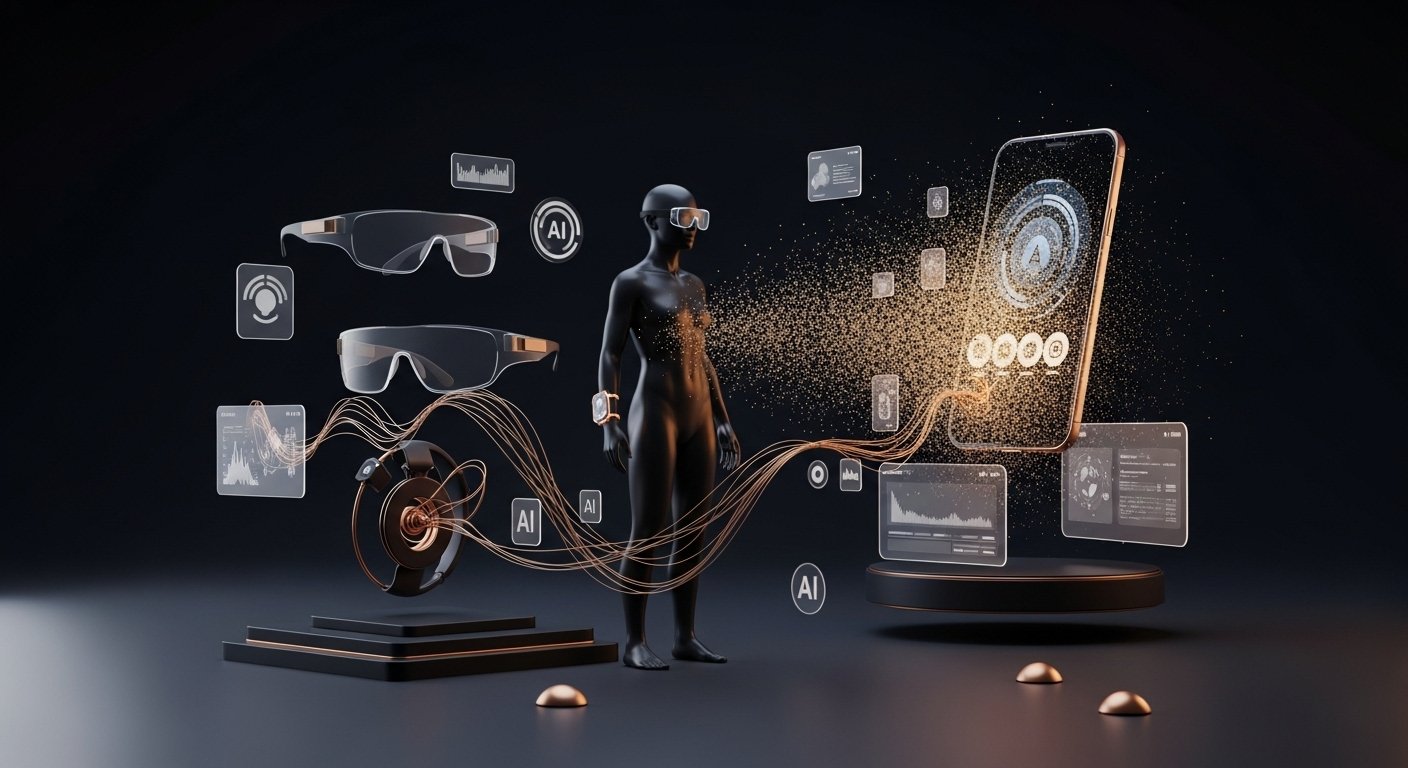
The global technology sector is currently navigating the most significant transition since the introduction of the modern smartphone in 2007. Research indicates that the world’s leading technology conglomerates—Meta, Apple, Alphabet, and Samsung—are collectively wagering over $150 billion on a future where the primary interface between human consciousness and digital information moves from the palm of the hand to the surrounding environment. This shift toward “ambient computing” is not merely a hardware refresh but a fundamental restructuring of the human-computer interaction (HCI) model. The projected $3 trillion market opportunity by 2030 reflects the immense economic stakes and the potential impact on global GDP as these technologies mature and move from specialized niches to mass-market adoption.
The Erosion of the Smartphone Hegemony: Causes and Structural Limitations
The impetus for a post-smartphone era arises from a combination of market saturation, hardware plateaus, and evolving consumer expectations. While smartphones remain the dominant personal computing device, with an estimated 46.2% share of the on-device AI market in 2025, the industry is increasingly characterized by diminishing marginal returns. Industry analysts and popular tech reviewers, such as Marques Brownlee (MKBHD) and Arun Maini (Mrwhosetheboss), have observed that smartphones have become “boring” by the year, with annual updates focusing on incremental improvements in camera optics and processing speed rather than disruptive functionality.
The Saturation of Incrementalism
The maturity of the smartphone category is best illustrated by the 2025 smartphone awards. While the iPhone 17 was crowned “Phone of the Year” for its high refresh rate display and upgraded base storage, the broader sentiment among tech enthusiasts is that these features represent a “catching up” phase rather than true innovation. The “Bust of the Year” awards, often given to devices like the iPhone 16, underscore the perception that current hardware feels “ancient” shortly after release because it fails to transcend the traditional screen-based interaction model.
Cognitive Load and Physical Friction
The structural limitations of the smartphone are becoming increasingly apparent. The device requires an “attention tax”—users must physically look down at a screen, navigate through layers of applications, and use manual touch inputs, which creates a cognitive bottleneck and interrupts physical reality. Furthermore, the “app-centric” model is becoming increasingly cumbersome as users manage dozens of disconnected services. Tech giants envision a transition to “agentic AI,” where autonomous systems manage these workflows on behalf of the user, requiring a more fluid, multi-modal interface than a 6-inch glass slab can provide.
The Privacy and Social Paradox
As smartphones integrate more deeply into daily life, they encounter rising privacy and social friction. Roughly 68% of users express concerns regarding ambient AI monitoring, and 74% are wary of brain-computer interfaces. Moreover, the physical presence of a smartphone in social settings is increasingly viewed as a barrier to human connection. Ambient computing seeks to solve this by making technology “invisible,” allowing users to maintain eye contact and physical presence while receiving digital assistance.
| Current Tech Limitation | Ambient Computing Solution | Projected Outcome (2030) |
| Screen-Based Dependency | Heads-Up AR/Holographic Displays | Reduced Neck Strain; Improved Spatial Awareness |
| Manual App Navigation | Agentic AI & Autonomous Workflows | Zero-UI Interactions; Time Savings |
| High Interaction Friction | Neuro-Wristbands & Gesture Control | Seamless Integration into Physical Tasks |
| Privacy Vulnerability | On-Device NPU & Edge Processing | Reduced Data Exposure; Instant Response |
The Hardware Frontier: Augmented Reality and Spatial Computing
The most prominent pillar of the post-smartphone vision is the development of Augmented Reality (AR) and Extended Reality (XR) hardware. Tech giants are racing to miniaturize the processing power of a workstation into the form factor of standard eyeglasses.
Meta’s Orion and the “Nerd Glass” Revolution
Meta’s “Orion” project represents the culmination of ten years of research and billions of dollars in investment aimed at creating a standalone AR platform. Orion is distinct from previous “smart glasses” because it utilizes silicon carbide lenses and micro-LED projectors to place full holograms into the real world with a 70-degree field of view.
A critical component of Orion is the neural wristband, which uses electromyography (EMG) to interpret electrical signals sent from the brain to the hand. This allows the user to control the digital interface with nearly invisible micro-gestures, solving the “social friction” problem of voice commands or large hand gestures in public. Although currently a prototype costing an estimated $10,000 per unit, Orion serves as the North Star for Meta’s transition from a social media company to a metaverse-driven hardware provider.
Samsung and the Android XR Ecosystem
In late 2025, Samsung officially entered the fray with the “Galaxy XR” headset and a roadmap for lightweight AI glasses. Co-developed with Google and Qualcomm, the Galaxy XR platform is designed to be an open, scalable ecosystem that competes directly with Apple’s Vision Pro.
Galaxy XR Headset Specifications
The Galaxy XR headset is a “business-first” device that aims to integrate spatial computing into the professional workday. It features dual 4K Micro-OLED displays with 4,032 PPI, delivering 27 million pixels for ultra-sharp visual clarity.
| Component | Technical Specification | Practical Implication |
| Processor | Snapdragon XR2+ Gen 2 | Support for advanced AI and low-latency passthrough |
| Display | 3,552 x 3,840 per eye (Micro-OLED) | Cinematic media viewing and professional CAD modeling |
| Sensors | 6 world-facing, 4 eye-tracking, 2 pass-through | Precise hand/eye navigation without controllers |
| Connectivity | Wi-Fi 7 & Bluetooth 5.4 | Seamless data sync with Galaxy phones and laptops |
| Weight | 545g (Headset) + 302g (External Battery) | Balanced ergonomics for 2-hour work sessions |
Beyond the headset, Samsung is developing lightweight AI glasses for a 2026 launch in partnership with Gentle Monster and Warby Parker. These glasses will feature electrochromic “transition lenses” that automatically adjust to lighting conditions, solving the practical problem of moving between indoor and outdoor environments while wearing digital displays.
Apple’s 2026 Transformation: Foldables and Ambient Home
Apple’s vision for 2026 represents a coordinated shift toward an AI-first future where the iPhone is no longer the sole centerpiece of the ecosystem. The company is reportedly working on five major products that move the needle toward ambient computing.
- The Foldable iPhone: Set for a 2026 debut, this device addresses the screen-size limitation by offering a 7.7-inch inner display in a pocketable 4.5mm-thin form factor. Apple has reportedly achieved “crease-free” display technology, removing a major aesthetic and durability barrier seen in competitors.
- Smart Home Command (HomePod Touch): A dedicated 7-inch display running a new “homeOS.” This device serves as the brain for a network of security cameras and sensors that use facial recognition to trigger “contextual automation” without requiring voice commands.
- Apple Glass: Rumored for 2026-2027, these will be lightweight glasses focused on “augmented intelligence”—overlaying notifications and directions directly in the field of view while leveraging the iPhone’s M-series or A-series processing power.
The Rise of Agentic AI: Software as a Coworker
The shift beyond smartphones is powered by a fundamental evolution in artificial intelligence. McKinsey and Publicis Sapient highlight the move from “Generative AI” (which creates content) to “Agentic AI” (which executes tasks).
Autonomous Systems and Digital Agents
In 2025-2026, AI is moving from pilot projects to practical “virtual coworkers.” Agentic AI systems are designed to learn, adapt, and collaborate, performing multi-step workflows such as coordinating logistics or managing complex supply chains independently. For instance, a “conductor agent” could coordinate a promotion by simultaneously adjusting pricing, merchandising, and fulfillment across multiple regions based on a single high-level goal.
Data Hygiene: The Foundation of Autonomy
A major challenge for businesses in this transition is data quality. Publicis Sapient warns that “garbage in, garbage out” is magnified tenfold when autonomy is involved. Approximately 40% of enterprises cite data governance as their top challenge in implementing agentic AI. Successful companies are adopting a “one registry, one reality” approach to ensure that AI agents operating in different regions follow consistent logic and security protocols.
Global AI Adoption Statistics
The Microsoft 2025 Global AI Adoption report reveals that roughly one in six people worldwide (16.3% of the population) now use generative AI tools regularly, a meaningful gain from 15.1% in the first half of 2025. The emergence of open-source platforms like DeepSeek has also democratized access to high-level AI in previously underserved markets.
| AI Market Metric | 2025 Value | 2029/2032 Projection | CAGR |
| Global AI Market (Total) | $243.7 Billion | – | 27.67% |
| On-Device AI Market | $26.61 Billion | $124.07 Billion (2032) | 24.6% |
| Smartphone/Wearable AI | $86.21 Billion | $254.44 Billion (2029) | 31.1% |
Standalone AI Gadgets: The “Post-Smartphone” Pioneers
While tech giants build ecosystems, several startups and niche products have attempted to launch standalone “phone killers.” Their successes and failures provide a roadmap for the future.
The Cautionary Tale of the Humane Ai Pin and Rabbit R1
Early AI-first wearables like the Humane Ai Pin ($700) and Rabbit R1 ($199) aimed to liberate users from screens. However, they were met with “scorching reviews” due to poor battery life, slow AI processing, and a lack of essential features. The Humane Ai Pin, in particular, struggled with its $24/month subscription model and its “laser ink” display, which was often difficult to read in bright light.
The failure of these devices highlights a critical insight: standalone AI hardware cannot succeed without being part of an established “personal data graph.” This gives Apple, Google, and Samsung a significant advantage, as their upcoming “AI Pins” or wearables will instantly tap into the user’s existing messages, photos, and preferences.
The Mobvoi TicNote and Niche AI Tools
Unlike the “everything devices,” specialized tools like the Mobvoi TicNote have found success by focusing on specific high-value tasks. The TicNote, a credit-card-sized recorder with ChatGPT integration, can record, transcribe, and summarize 30-minute meetings in real-time, distinguishing between different speakers and translating over 100 languages. This suggests that the post-smartphone era may be characterized by a “constellation” of smaller, purpose-built devices rather than a single replacement.
Industry-Specific Pivots: Healthcare, Retail, and Manufacturing
The transition to a screenless or multi-modal future is reshaping how core business operations are conducted across major sectors.
Healthcare: Precision and Ambient Care
In 2025, the healthcare landscape is being transformed by digital tools like smart implants and wearable sensors that provide real-time patient data.
- Precision Medicine: AI integrates genomics and lifestyle data to tailor treatments, reducing specialist wait times by up to 84%.
- AR in Surgery: Surgeons are increasingly using AR glasses to overlay critical patient data onto their field of view during operations, while dentists use glasses like the Ray-Ban Meta to record procedures for peer instruction hands-free.
- Elderly Care: Fall detection algorithms and location tracking for dementia patients are becoming standard features in the “age-tech” industry.
Retail: Agent-to-Agent Commerce and Virtual Presence
Retailers are pivoting to meet the demands of an AI-savvy consumer base.
- Virtual Try-Ons: Platforms like Sephora and Amazon are integrating AR to allow customers to virtually try on makeup and clothing, with 76% of consumers preferring brands that offer these experiences.
- Agent-to-Agent Commerce: Industry leaders are preparing for a future where a customer’s personal AI agent negotiates directly with a store’s pricing agent to execute a transaction.
- Hyper-Personalization: AI analyzes customer behavior to offer dynamic pricing and personalized recommendations, improving conversion rates and customer loyalty.
Manufacturing and Training
The use of AR in industrial settings is yielding significant ROI. Boeing reported a 25% reduction in production time and a 50% decrease in errors by using AR glasses to guide workers through complex wiring assembly processes. These “augmented instructions” act as real-time mentors, circling the exact bolt or wire a worker needs to interact with.
| Industry | Primary Technology Application | Observed Result/Benefit |
| Healthcare | AR Surgical Overlays & Remote Monitoring | 63% fewer hospital readmissions |
| Manufacturing | AR Picking Lists & Assembly Guides | millions saved in operational costs |
| Education | Immersive 3D Learning Modules | Improved engagement and retention |
| Logistics | Amazon Smart Delivery Glasses | Hazard identification and seamless navigation |
Social Etiquette, Legal Challenges, and the “Privacy Paradigm”
As computing becomes ambient and “invisible,” society must establish new norms and legal frameworks to manage the constant presence of sensors.
The Two-Party Consent Hurdle
States like California require two-party consent for recording audio, presenting a significant legal challenge for smart glasses. Employers must conduct thorough risk assessments to ensure that smart glasses do not inadvertently capture sensitive data or trade secrets in the workplace.
New Rules of Tech Etiquette in 2025
Etiquette experts suggest that “opacity” is the main problem with new tech. When a device is invisible, behavior must become more transparent.
- The “Attention Awareness” Feature: Modern glasses are designed to minimize digital distractions when they detect the wearer is in a conversation.
- Consent First: Media leaders report that consent-first user experiences boost trust, which is critical since privacy remains the top barrier to AI adoption.
- Public Recording: While public recording is generally unrestricted in the US, private businesses like gyms and restaurants are increasingly implementing “no-voice tech” zones or “no-photography” policies.

Privacy Indicators
To address the “creeper” perception, tech giants are integrating clear physical indicators. The Ray-Ban Meta and Galaxy XR glasses include a glowing LED that is hard-wired to the camera, making it visible to others when recording is active.
Solutions and Strategic Recommendations for the Transition
Transitioning to a post-smartphone era requires a proactive approach to technology management, power sustainability, and digital hygiene.
Managing the “Power Bottleneck”
Battery life remains the primary demand for 89% of users.
- Solid-State Batteries: These provide triple the energy density of current batteries and rapid charging capabilities.
- Adaptive Power Mode: AI learns usage patterns to make small adjustments, helping devices last throughout the day.
- Energy Harvesting: Body and ambient energy sources are being explored to enable “perpetual operation” for basic wearable sensors.
Strategic Recommendations for Businesses
- Invest in Application-Specific Semiconductors: To handle the compute intensity of agentic AI, businesses should pivot toward specialized hardware designed for local AI inference.
- Standardize Data Hygiene: Before deploying agents, ensure your data is clean, traceable, and governed. Inconsistent data will lead to “automated mistakes” at scale.
- Prioritize Privacy Engineering: demonstrating transparency and fairness is no longer just ethical—it is a strategic lever for market adoption.
Tips for Consumers Transitioning to AR
- Opt for Edge Processing: Choose devices that process data locally on the device (NPU) rather than in the cloud to ensure lower latency and higher privacy.
- Verify Ecosystem Compatibility: Ensure your smart glasses or AI pin can seamlessly connect to your existing digital accounts (iCloud, Google Workspace) to avoid the “fragmented data” problem.
- Practice “Digital Manners”: Be explicit with others when you are recording or using an AI assistant in social settings to preserve human connection.
Conclusion: The Architecture of the Future
The tech giants’ vision for a future beyond smartphones is not about the elimination of the mobile device, but its evolution into a “pocket server” for an array of ambient peripherals. The smartphone of 2030 will likely be a secondary tool, while AR glasses, neural wristbands, and ambient home OS systems serve as the primary interface for human-digital interaction.
This transition is underpinned by the massive growth of the on-device AI market, projected to reach over $124 billion by 2032. However, the success of this paradigm shift will depend less on the hardware’s megapixel count or processing speed and more on the industry’s ability to solve the “Privacy Paradox,” improve battery sustainability, and establish a new social contract for the age of ambient intelligence. As computing becomes an invisible layer that enhances our reality rather than a tool that demands our constant attention, the ultimate goal of tech giants is to make digital intelligence as natural and ubiquitous as the air we breathe.
FAQs
The post-smartphone era refers to a future where smartphones are no longer the primary interface for digital interaction. Instead, technologies like AR glasses, ambient computing systems, AI wearables, and agentic AI handle everyday tasks with minimal screen usage.
Ambient computing is a technology model where digital systems operate in the background, responding to user context automatically. It relies on AI, sensors, voice, gestures, and spatial interfaces to deliver information without constant manual input.
Ambient computing enables real-time patient monitoring, AR-assisted surgeries, precision medicine, and elderly care automation. These technologies help reduce hospital readmissions and improve treatment accuracy.
Retail is shifting toward virtual try-ons, AI-to-AI commerce, and hyper-personalized shopping experiences, where a customer’s AI agent can negotiate and complete purchases automatically.