
Agentic AI represents the next evolution in artificial intelligence. Unlike traditional AI systems that simply respond to commands, agentic AI consists of autonomous agents capable of setting goals, planning steps, making decisions, and taking actions independently. These systems can handle complex tasks—like scheduling appointments, negotiating deals, or even managing financial transactions—often without constant human oversight.
This technology is already transforming industries. For example, companies like Klarna use agentic AI to process payments and refunds automatically. It promises greater efficiency, allowing businesses to scale operations and individuals to delegate routine or time-consuming work. However, this autonomy comes with significant risks. When AI can act on its own, it opens the door to sophisticated fraud, impersonation, and security breaches. Fraudsters are quick to exploit these tools, leading to a surge in deepfake voices, synthetic identities, and automated attacks.
In today’s digital world, where voice calls, virtual meetings, and AI-driven interactions are commonplace, understanding agentic AI is crucial. It affects everyone—from consumers worried about personal data to businesses protecting against financial losses. Leaders like Pind Pindrop and Anonybit are at the forefront, developing tools to detect threats and secure identities in this new era.
The Growing Risks of Agentic AI in Fraud and Security
Agentic AI amplifies existing threats while creating new ones. Fraudsters now use these systems to launch machine-led attacks at unprecedented scale. Synthetic voices can mimic loved ones or executives with eerie accuracy, convincing victims to transfer money or share sensitive information.
Key issues include:
- Deepfake and Voice Fraud Explosion: Deepfake call activity skyrocketed by 1,337% in 2024, rising from one incident per month to seven per day. By late 2024, nearly 1% of calls to contact centers (1 in 106) involved synthetic voices. Experts predict a further 162% increase in deepfake fraud in 2025.
- Autonomous Impersonation: Agentic AI allows bots to initiate calls, adapt in real-time conversations, and handle off-script questions. They can cycle through stolen credentials or collaborate in coordinated attacks.
- Interactive and Scalable Attacks: With over 2,400 text-to-speech engines available, creating convincing deepfakes is easier than ever. Agentic systems add conversational fluency, making them harder to spot in live interactions.
- Broader Vulnerabilities: Beyond finances, risks extend to non-financial fraud, like using deepfaked avatars in job interviews for insider access. All real-time communication—call centers, virtual meetings, and smart devices—is vulnerable.
These threats erode trust in digital interactions. One in every 599 calls is already fraudulent, highlighting the urgency for robust defenses.
Latest Insights and Reports on Agentic AI Threats
Recent reports and discussions provide a clear picture of the evolving landscape. Pindrop’s 2025 Voice Intelligence and Security Report details how AI is reshaping fraud, with deepfakes becoming mainstream. The report emphasizes that agentic AI enables fully autonomous, high-volume attacks, often bypassing traditional defenses.
Webinars and industry talks, including those featuring experts from Pindrop, Anonybit, and Validsoft, stress the need for biometric solutions. In one session, speakers noted that agentic AI’s memory and collaboration features allow breaches at scale, extending risks to machine-to-machine interactions.
YouTube discussions add timely perspectives. Pindrop’s video “Agentic AI Is Fueling a Deepfake Fraud Explosion” breaks down real-world data, showing how these systems fuel the crisis with evidence from millions of analyzed calls. Another video highlights companies like Anonybit and Pindrop as key players focusing on agentic AI security, underscoring decentralized approaches to identity binding.
Anonybit’s recent launches, such as their platform for secure agentic workflows, address the “identity gap”—ensuring AI agents act only on behalf of verified humans. These insights reveal a consensus: without advanced detection and binding, agentic AI could overwhelm current security measures.
Solutions from Pindrop: Detecting and Stopping Voice Threats
Pindrop specializes in voice security, offering tools tailored to combat agentic AI-driven fraud.
Their flagship solutions include:
- Real-Time Deepfake Detection: Pindrop Pulse analyzes audio for over 500 text-to-speech engines, tracing manipulations and confirming human authenticity through liveness checks.
- Anomaly Identification: It flags inconsistencies like unnatural pauses, robotic timing, missing background noise, or millisecond delays—common in synthetic voices.
- Contextual and Behavioral Analysis: Systems detect when responses lack depth, use overly formal language, or fail off-script probes.
- Integration for Contact Centers and Meetings: Tools like Pulse for Meetings scan virtual conferences for fraud, protecting enterprises from executive impersonation.
Pindrop’s approach empowers organizations to verify not just identity, but humanity in every interaction. Training staff on red flags complements these technologies for layered defense.
Solutions from Anonybit: Securing Identity in Autonomous Systems
Anonybit takes a privacy-first approach with decentralized biometrics, ensuring agentic AI remains tied to real humans.
Central to their innovation is the Circle of Identity framework:
- Biometric Binding: At registration, biometrics (face, voice, fingerprint, iris, or palm) create encrypted signatures linked to credentials, devices, or AI agents.
- Dynamic Tokens: Each action generates unique, time-bound tokens cryptographically tied to the human, preventing reuse or replay attacks.
- Privacy-Enhancing Tech: Using multi-party computation and zero-knowledge proofs, data is fragmented—no central honeypot for hackers.
- Continuous Authentication: Supports seamless verification across touchpoints, from call centers to automated transactions, while detecting deepfakes or injections.
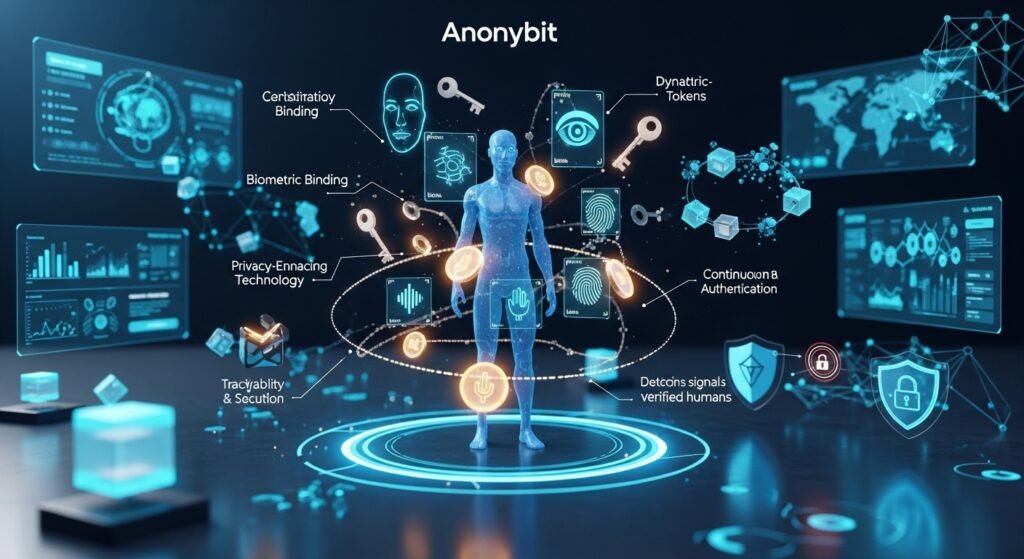
This binds AI agents to verified identities, making actions traceable and revocable if compromised. It’s ideal for fintech, workforce automation, and beyond, resisting quantum threats and insider risks.
Practical Tips for Protecting Against Agentic AIS Risks
Businesses and individuals can take proactive steps:
- Implement multi-layered voice voice authentication with liveness detection.
- Adopt biometric-bound systems for AI agents to ensure human oversight.
- Train teams to spot anomalies, like unnatural speech patterns.
- Use real-time analytics tools for calls and meetings.
- Stay updated via industry reports and prioritize decentralized, privacy-focused solutions.
- For consumers: Be cautious with unsolicited calls and verify requests through multiple channels.
Combining detection (like Pindrop) with identity binding (like Anonybit) creates robust protection.
Conclusion: Building a Secure Future with Agentic AI
Agentic AI holds immense promise for efficiency and innovation, but its risks—scaled fraud, deepfakes, and impersonation—demand immediate action. Insights from Pindrop’s reports and Anonybit’s frameworks show a path forward: advanced detection paired with biometric-secured identities.
By adopting these solutions, organizations can harness agentic AI’s benefits while minimizing threats. The key is proactive investment in trust-building technologies. As discussions in webinars and videos emphasize, collaboration across industry leaders will shape a safer digital tomorrow. Stay informed, implement strong defenses, and embrace agentic AI responsibly.
FAQS
Agentic AI is an autonomous AI system capable of making decisions, planning, and taking actions independently without constant human oversight.
It introduces risks like deepfake fraud, synthetic voices, and automated attacks, requiring advanced detection and identity verification.
Anonybit uses biometric binding and decentralized identity frameworks to ensure AI agents act only on behalf of verified humans.
Yes, it can enable scalable voice fraud, impersonation, and automated cyberattacks if not properly secured.