
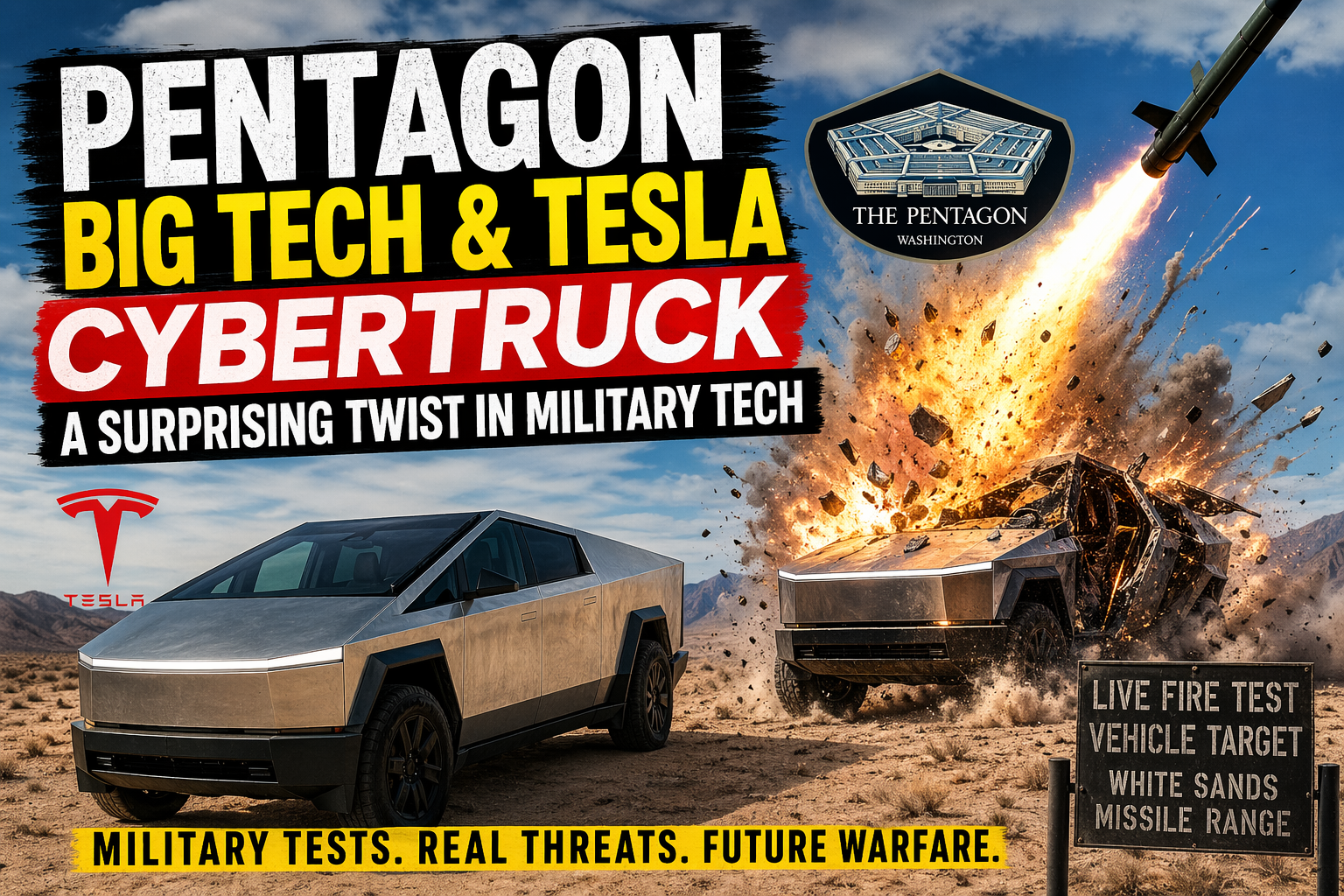
The U.S. Air Force purchasing Tesla Cybertrucks only to destroy them using missile strikes may be a headline out of a satirical news site. Still, it is a fact, and it fully illustrates how the Pentagon is collaborating with Big Tech in surprising and new ways. In August 2025, the Air Force Test Center posted procurement notices without much fanfare, declaring their intention to buy two Cybertrucks (as well as 31 other types of vehicles) that will be used as live targets for missile exercises at White Sands Missile Range, New Mexico. The purpose? Equip Special Operations forces with the know-how to use precision-guided munitions like Hellfire missiles against vehicles that adversaries might actually be driving in the times of war.
It is far beyond target shooting. It underlines a major transformation: the Defense Department is consulting with the likes of Tesla for the latest breakthrough ideas since the wave of new threats calls for quicker and more innovative solutions, which the traditional defense suppliers are not always able to provide. Ordinary people should take note since this partnership is a matter of national security, impacts taxpayer money, and may even determine the role of electric vehicles in defense. All right, let’s look at it.
Reasons for Choosing Cybertruck. Pros and Cons of This Vehicle
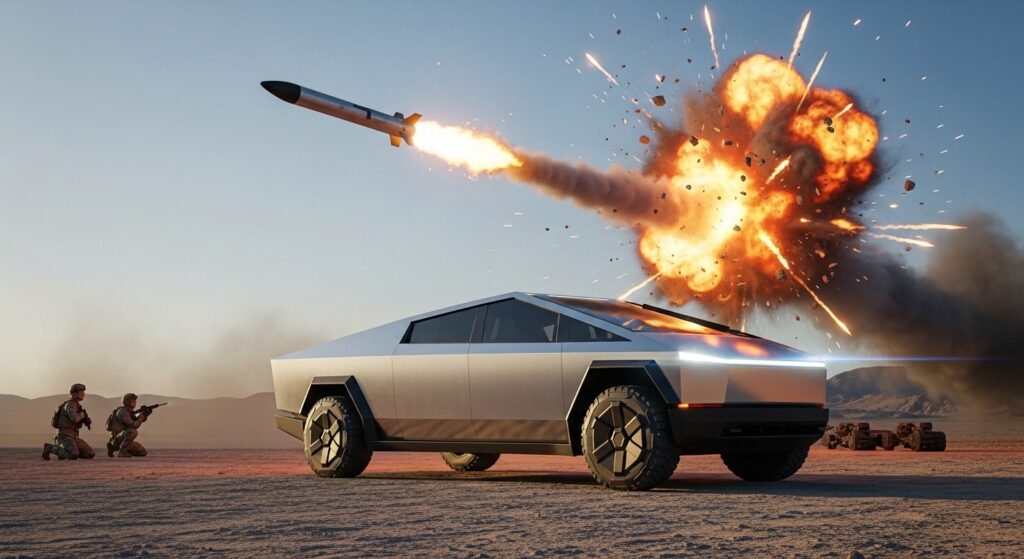
Cybertruck is radically different from regular pickups. Besides its name, the design concept of this vehicle is totally alien and innovative. Firstly, it is wrapped with a cuboidal exoskeleton made of stainless steel and very tough. Secondly, Tesla has equipped it with features that not only make it able to resist dents and scratches but also protect it from ballistic impacts. In fact, it has been claimed that the Cybertruck body’s steel and aluminum components are far superior to those in other vehicles. Military officials took note. To quote the Air Force’s own statement, enemies “may switch” to vehicles of a type similar to the Cybertruck since “they have been discovered not to sustain the typical level of damage that one would expect after a heavy hit.” Simply put, if hostile forces begin to use that kind of impervious and electrically powered vehicles, then U.S. troops will have to learn how to successfully eliminate such targets.
The above thoughts imply that this is just one of many issues of modern warfare:
- The changing face of threats: For years militants have relied on civilian vehicles for their mobility and their work (for example the Toyota Hilux which is the model most used for technicals). However, nowadays the newest civilian electric cars that are well built could be seen on the battlefield, mostly in hybrid conflicts, both non-state actors and near-peer competitors.
- Issues of procurement: The US Department of Defense used to buy mainly from well-known large corporations. Choosing a Tesla model needed a sole-source justification, which is a way to show that Big Tech’s consumer products are already becoming part of defense strategies.
- The military-technology gap: Public might think that the army is always fully equipped and updated but, the reality is that even army vehicles can be out of top fashion. Tech giants, on the other hand, can be the military’s strategic partners in terms of quick production, AI applications, and technology that is also used in the civilian sector (dual-use tech).
Recently: Key Media Reports and Youtube Analyses
The story came out in early August 2025 when contracting documents were posted on the government’s System for Award Management website. The War Zone, a defense publication, was the first to report it, mentioning that the Cybertrucks didn’t even have to be running, they could be simply towed, drained of their fluids, and used as static or rolling targets for live-fire tests in support of U.S. Special Operations Command’s Stand-Off Precision Guided Munitions program.
Creators on YouTube contributed with more information and simplifying the subject for the public. A widely seen video, “Air Force Uses Tesla Cybertrucks as Missile Targets: Pentagon & Big Tech Ties Explained, ” elaborates on the bigger picture including SpaceX’s Starlink for military communications, Palantir’s AI tools, and billions in contracts. The creators point out major defense budgets, bipartisan support, and a “new era of privatized military tech”. Another video, “Pentagon Declares War on Cybertrucks?” is joking about the fact that the famous “bulletproof” truck by Musk is tested against the US weapons while emphasizing the real aim: making certain that the US forces are well trained if the opponents will use the same type of vehicles.
Even in early 2026, the incident is still mentioned as a classic case of the Pentagon’s decision to collaborate with Silicon Valley. Some even discuss how these vehicles can be used positively, like the State Department’s plan in 2025 of up to $400 million worth armored Cybertrucks for diplomats. At the same time, SpaceX has bought a large number of Cybertrucks, which has helped Tesla’s sales during a time when the demand for civilian vehicles has slowed down.
There has been no public test data released yet, but through the purchase, the military is showing that they are seriously looking into how vehicles hold up in the real-world conditions.
How This Partnership Helps, and Practical Takeaways
This Cybertruck saga is not a hurdle to “solve” literally, but there are certainly some clear advantages and lessons that can be drawn from it:
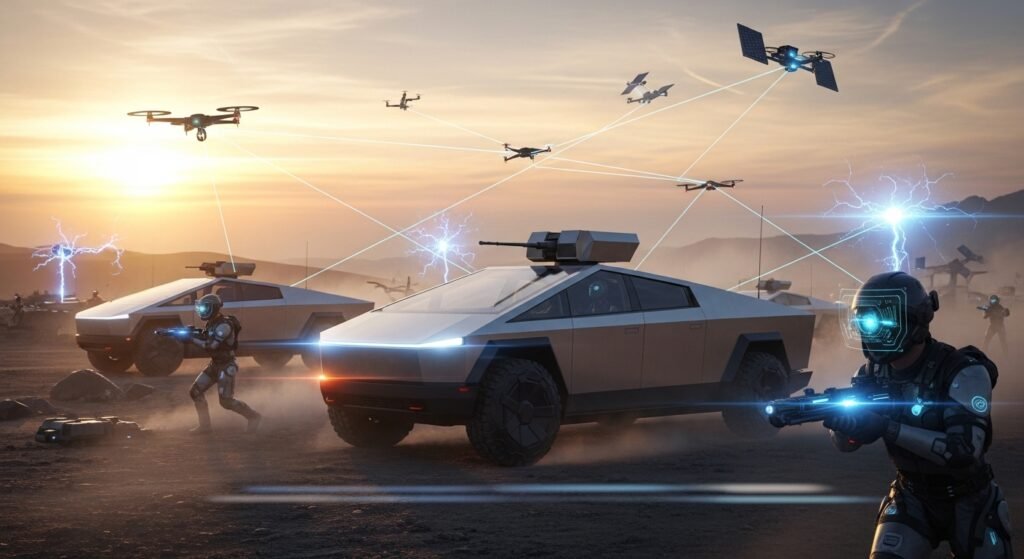
- Training under realistic conditions: Training with the real Cybertrucks (as opposed to the generic mockups) enables the crews to familiarize themselves with a vehicle’s exact dimensions and features such as contour and strength. This aids them in becoming more proficient in using weapons like the AGM-176 Griffin or GBU-69 Small Glide Munition.
- Shortening the innovation cycle: While Big Tech generally operates at an accelerated pace compared to defense primes that are often quite slow, collaboration can make the chain of bringing electric powertrains, advanced materials, and software updates to the battlefield more direct and efficient.
- Cost and efficiency: It can be more cost-effective and less time-consuming to purchase commercial off-the-shelf technology (COTS) and then modify or test it instead of going through the complete process of designing everything from the ground up.
Wrapping It Up: A New Chapter in Defense
The interest in the Tesla Cybertruck on the part of the Pentagon, whether it is considered just as a target for the missile or a future vehicle for an armored fleet, is a clear sign of a silent revolution. Accessibility of Big Tech and military, which used to be “worlds apart” back then, now they are partners addressing the most challenging problems like drone swarms, electronic warfare, and hybrid battlefields. The Air Force’s 2025 RFP, which has widely been covered on YouTube and defense forums, signals that sometimes innovations might come in the last packages that one would expect.
FAQs
The Pentagon purchased Tesla Cybertrucks to use them as real-world targets for missile testing. This helps military forces understand how modern electric vehicles with advanced materials perform under combat conditions.
Currently, Tesla Cybertrucks are primarily being used for testing and training purposes rather than active combat operations. However, their features could influence future military vehicle designs.
The Cybertruck’s stainless steel exoskeleton, durability, and resistance to damage make it an ideal candidate for testing how modern vehicles withstand advanced weapon systems.
This collaboration signals a shift toward integrating commercial technologies into defense systems, accelerating innovation and introducing electric and AI-powered solutions into modern warfare.