

Starting a business doesn’t always require a massive warehouse or a million-dollar investment. In the modern economy, micro-manufacturing is becoming the go-to path for entrepreneurs. With just a small machine and a bit of space in your garage, you can transform raw materials into high-demand products.
If you are looking for 12 unique business ideas that focus on tangible production and high profit margins, this guide covers the machinery, costs, and market potential for each.
1. Small-Batch Coffee Roasting
While many people focus on opening a cafe, the real profit lies in roasting the beans. Small coffee roasting machines designed for home use have a compact footprint—often the size of a microwave—and plug into standard outlets.
- Investment: Basic models start around $1,300, while professional units (1–2kg capacity) range from $3,000 to $8,000.
- The Math: Green coffee beans cost roughly $4–$7 per pound. Once roasted, they retail for $12–$20 per pound.
- Market Edge: Your selling point is freshness. Unlike grocery store beans that sit for months, your specialty coffee can be delivered to customers days after roasting.

2. Portable Laser Rust Removal
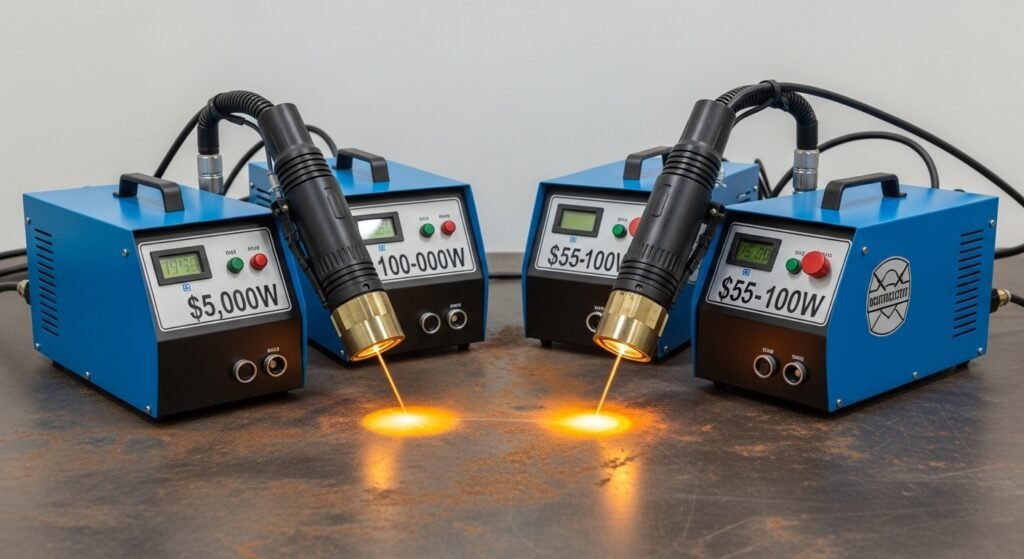
Laser rust removal is a high-tech solution to an old problem. These machines use focused light beams to strip rust, paint, and grime off metal without the mess of chemicals or sandblasting.
- Investment: Entry-level handheld units (100–200W) start at $5,000. High-power machines can reach $15,000.
- Revenue Model: You can charge $50–$100 per hour for restoration work.
- Target Market: Classic car enthusiasts, antique dealers (restoring cast iron cookware), and contractors with rusty tools.
3. Desktop CNC Plasma Cutting
A CNC plasma cutter brings industrial-grade metal fabrication to your garage. It uses computer-controlled torches to cut intricate shapes out of sheet metal with extreme precision.
- Investment: Systems like the Crossfire start at $1,500, while pro setups cost between $4,000 and $8,000.
- Potential Products: Custom metal signs, decorative wall art, automotive brackets, and fire pits.
- The Advantage: Speed. You can produce custom car parts in hours that would normally take weeks to order from a specialized supplier.

4. Professional Wood Turning
A wood lathe is a classic tool that remains one of the most profitable for a solo craftsman. It allows you to create high-end, handmade goods that command premium prices.
- Investment: Quality mid-size lathes cost between $800 and $2,000.
- Profit Margins: A custom pen costs $5 to make and sells for $20–$60. Decorative bowls can fetch $50–$200 depending on the wood type.
- Materials: Raw materials can often be sourced cheaply or even for free from fallen trees or construction scraps.

5. Custom Screen Printing
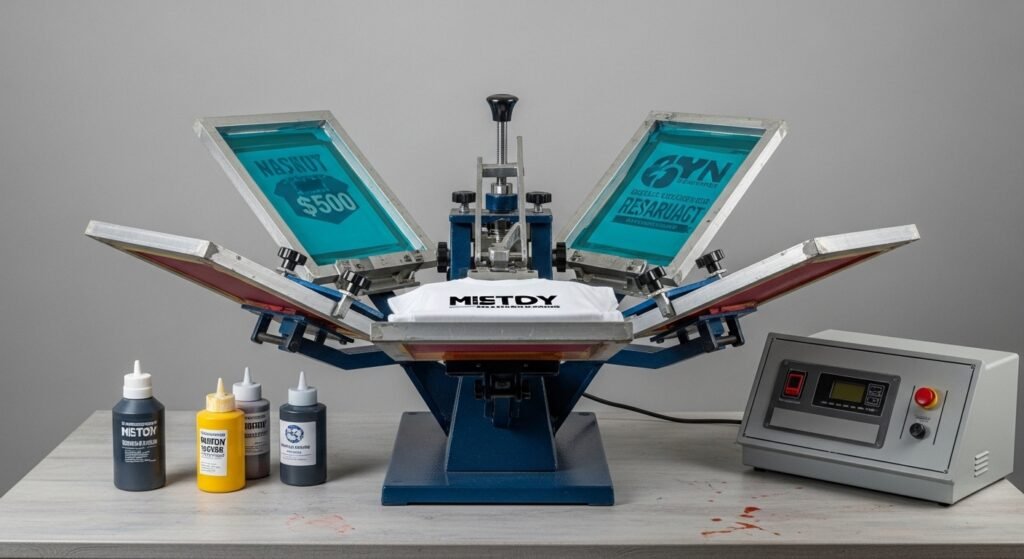
The demand for custom apparel is massive and constant. A screen printing setup allows you to serve local organizations that need branding.
- Investment: A manual press, screens, inks, and a flash dryer cost between $500 and $2,000.
- Profitability: A T-shirt costing $5 to produce can be sold for $15–$25.
- Competitive Edge: While online giants require high minimum orders, you can win by offering small batches (e.g., 12 shirts for a local restaurant) with 24-hour turnaround times.
6. Industrial Sewing & Leatherwork
Standard sewing machines can’t handle heavy-duty materials, which is where the industrial machine comes in. This opens the door to the luxury leather goods market.
- Investment: Heavy-duty machines cost $800 to $3,000.
- Revenue: A leather belt with $10 in materials can sell for $60–$100.
- Services: Beyond products, you can offer repair services for boat covers, motorcycle seats, and car upholstery—jobs regular tailors can’t touch.

7. Desktop Vacuum Forming
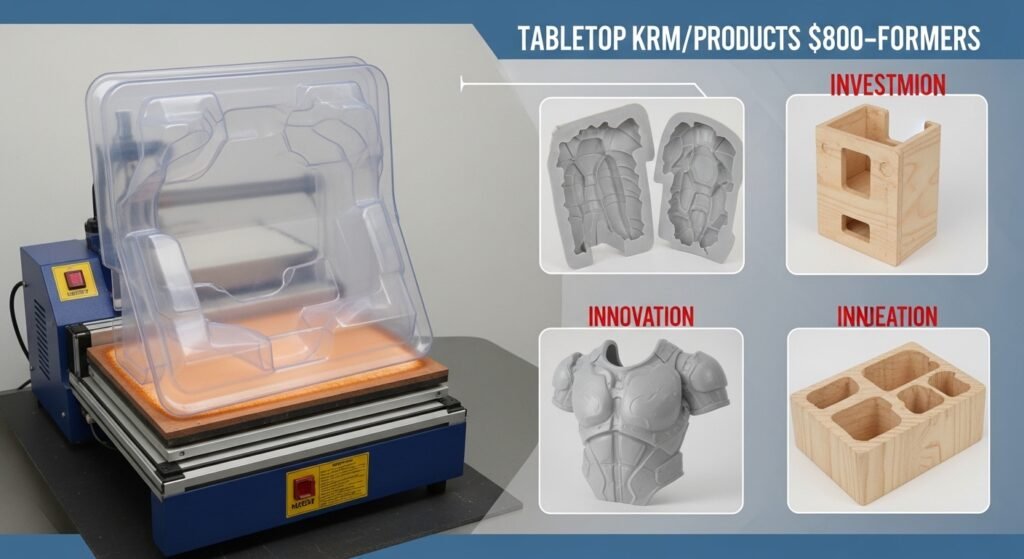
Vacuum forming involves heating plastic sheets and molding them over a shape to create custom parts. This is a highly versatile manufacturing method for a small space.
- Investment: Tabletop formers cost $800 to $3,000.
- Applications: Custom product packaging, cosplay armor, and specialized organizers.
- Innovation: You can use 3D-printed or wood-carved molds to create unique products that don’t exist anywhere else in the market.
8. Commercial Food Dehydration
Healthy, preservative-free snacks are a booming niche. A professional dehydrator allows you to turn fresh ingredients into shelf-stable products.
- Investment: Professional-grade units cost $200 to $1,000.
- Market Value: Beef jerky can sell for $20 per 4oz bag.
- Workflow: The process is largely “hands-off”—load the machine, set the timer, and let it work overnight. You can partner with local farms to source produce at bulk prices.

9. Precious Plastic Recycling
This business model allows you to get paid twice: once to collect waste and again to sell the finished product. Using shredders and extruders, you can turn plastic waste into art or utility items.
- Investment: Setup costs range from $2,000 to $8,000.
- Storytelling: Products like coasters or bowls made from recycled detergent bottles carry a powerful environmental story that customers are willing to pay extra for.

10. Professional Key Duplication
Key cutting is an essential, recession-proof service. It’s a simple business model that relies on speed and local convenience.
- Investment: Professional duplicators cost $500 to $3,000.
- Profitability: Each key costs pennies in blanks but sells for $3–$8.
- B2B Opportunity: Focus on property managers and real estate agents who constantly need multiple copies for new tenants and lockboxes.

11. Biomass Pellet Production
If you have access to agricultural waste or sawdust, a pellet mill can turn that “trash” into fuel or animal feed.
- Investment: Compact mills cost $1,500 to $5,000.
- The Market: Wood pellets for heating stoves sell for $6–$8 per 40lb bag.
- Sourcing: Many lumber yards will give you sawdust for free just to have it removed from their site, making your production costs nearly zero.

12. Rubber Stamp Manufacturing
Despite the digital age, businesses and notaries still rely heavily on physical stamps for documentation and branding.

- Investment: Systems cost as little as $60 to $500.
- Margins: A stamp that costs $2–$5 to make can be sold for $15–$30.
- Speed: Most orders can be completed the same day, making you the preferred choice over slow online vendors.
Note: Included in the research is also the rising demand for Wooden Cutlery Manufacturing (00:13:08). Machines costing $4,000–$12,000 can produce thousands of eco-friendly utensils per hour, serving the growing market of plastic-free restaurants and catering companies.
Conclusion
The success of these 12 unique business ideas doesn’t depend on finding a “perfect” machine, but rather on matching a machine to your local market’s needs. Whether it is roasting coffee or laser-cleaning metal, these tools allow you to move from a consumer to a producer right from your own garage.