

In today’s world, reliable internet and entertainment options are essential for most households. Behind much of this connectivity, especially in cable-based services, are companies known as Multi-System Operators, or MSOs. These organizations play a quiet but crucial role in delivering television, high-speed internet, and phone services to millions of people.
Simply put, a Multi-System Operator (MSO) is a company that owns and manages multiple cable television or broadband systems across different regions. Instead of serving just one local area, MSOs operate on a larger scale, often covering entire states or countries. This allows them to bundle services efficiently and reach a wide audience. Major examples include Comcast (operating as Xfinity), Charter Communications (Spectrum), and Cox Communications in the United States. These companies have evolved from traditional cable TV providers into full-service broadband giants, adapting to changing consumer needs.
Why does this matter to everyday users? MSOs control much of the infrastructure that brings streaming, online gaming, remote work tools, and live TV into homes. Without them, accessing affordable high-speed internet in many areas would be much harder.
Key Challenges Facing MSOs Today
The cable and broadband industry has faced significant hurdles in recent years. One of the biggest issues is cord-cutting—the trend where consumers cancel traditional cable TV subscriptions in favor of streaming platforms like Netflix, YouTube, or Disney+.
- Declining TV Subscribers: Traditional cable TV viewership has dropped steadily as people prefer on-demand content over scheduled programming. This shift has forced MSOs to rethink their core business.
- Intense Competition: Streaming services and fiber-optic providers (like Google Fiber or AT&T) offer faster speeds and more flexible options, putting pressure on cable-based systems.
- Network Upgrades Needed: Older cable infrastructure struggles to keep up with demands for multi-gigabit speeds and low latency, requiring costly investments in new technology like DOCSIS 4.0 or fiber extensions.
- Rising Costs and Security Threats: MSOs deal with increasing programming fees, equipment cloning risks, and cybersecurity concerns as networks become more complex.
These challenges create a ripple effect: higher prices for consumers in some cases, or slower service improvements in others.
Latest Developments in the MSO Landscape
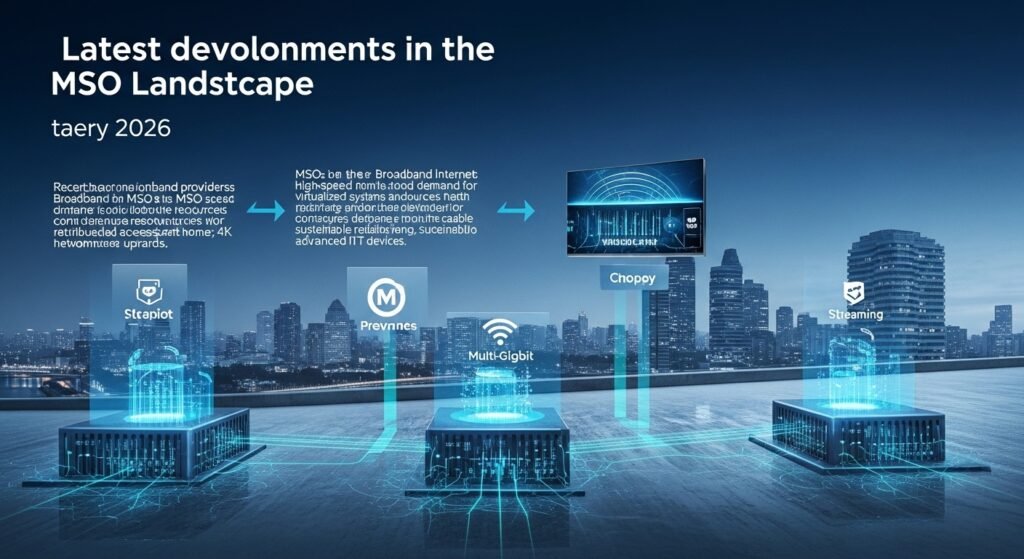
As of early 2026, the industry is undergoing rapid change. MSOs are increasingly focusing on broadband internet as their primary revenue source, since demand for high-speed connectivity continues to grow with remote work, smart homes, and 4K streaming.
Recent reports highlight ongoing consolidation. For instance, mergers and acquisitions are reshaping the market, with deals aimed at combining resources for better network upgrades. Broadband providers are accelerating adoption of virtualized systems and distributed access architectures to deliver faster, more reliable service.
Innovation is also key. Many MSOs are integrating AI to optimize networks, predict outages, and improve customer experiences. Multi-gigabit speeds are becoming standard in urban areas, and there’s a push toward sustainable, scalable infrastructure to handle future demands like augmented reality or advanced IoT devices.
While in-depth YouTube discussions specifically on MSOs are more common in technical or industry channels from past years (often focusing on infrastructure basics), broader creator content emphasizes how streaming has disrupted traditional cable. This reinforces the shift: MSOs must innovate quickly to stay relevant in a digital-first world.
Practical Tips for Dealing with MSOs
Whether you’re a current customer or shopping for services, here are some helpful strategies to get the most value:
- Compare Bundles Wisely: MSOs often offer discounts for combining internet, TV, and phone services. Calculate if the bundle saves money compared to standalone streaming plus internet.
- Check Coverage and Speeds: Use the provider’s website tool to verify availability in your area. Look for plans with at least 500 Mbps download speeds for households with multiple devices.
- Negotiate or Switch: Loyalty doesn’t always pay—call to ask about promotions for existing customers, or threaten to switch for better deals. Many users save hundreds annually this way.
- Troubleshoot Common Issues:
- Slow speeds: Restart your modem/router first, then check for outages on the provider’s app.
- High bills: Review statements for hidden fees and consider downgrading TV packages if you mostly stream.
- Equipment problems: Renting modems can be convenient but costly long-term—buying your own compatible device often pays off.
- Explore Alternatives: If your MSO’s service is unreliable, look into fixed wireless, satellite, or local fiber options for backup.
Staying informed about promotions and reading user reviews on independent sites can help you avoid overpaying.
Final Thoughts
Multi-System Operators remain vital to modern connectivity, evolving from cable TV roots into broadband powerhouses amid fierce competition and technological shifts. While challenges like cord-cutting and infrastructure demands persist, ongoing innovations—such as faster networks, AI enhancements, and strategic consolidations—point to a resilient future focused on reliable internet access.
For consumers, the key is staying proactive: understand your options, negotiate effectively, and choose plans that fit your actual usage. As the industry continues to adapt in 2026 and beyond, MSOs will likely play an even bigger role in bridging the digital divide and powering everyday life.
FAQs
A Multi-System Operator (MSO) is a company that owns and manages multiple cable or broadband systems across different regions, delivering TV, internet, and phone services efficiently.
MSOs power high-speed internet, streaming, and communication services for millions of households, enabling remote work, entertainment, and smart home connectivity.
Some leading MSOs in the U.S. include Comcast (Xfinity), Charter Communications (Spectrum), and Cox Communications.
Through network upgrades like DOCSIS 4.0, fiber extensions, virtualized systems, and AI-based outage prediction and traffic management.